.webp)

Prosper Health's Autism Resource Center
Featured Article

Neurodivergent vs. Autism: Understanding the Relationship and When to Seek Evaluation
“Neurodivergent” and “autistic” often get swapped for one another, in social captions, casual conversations, and sometimes even in settings where you might think people would know better.
Using the terms loosely isn't always a big deal. But it can matter more when you’re trying to figure out what these terms mean for you, especially if you’re wondering whether you might be autistic.
This is because the two terms really aren’t interchangeable, even though the mix-up can be common. Here’s how “neurodivergent” and “autism” relate, why the confusion happens in the first place, and what a next step might look like if you're seeking diagnosis.
Does Autism Qualify for Disability Benefits? A Practical Guide for Autistic Adults
If you've recently done an online search for the term “autism disability benefits”, you probably walked away with more questions than answers. Unfortunately, this happens because the search phrase “autism disability benefits” covers a very broad spectrum, and the resources your results pulled up may not even apply to your personal situation.
For example, one of the first results that usually comes up using this search term (as well as “Do you get disability for autism?”) is the Social Security Administration’s page for benefits for children with disabilities.
But if you made it to this page, you’re actually on the right path: “Autism disability benefits” almost always means Social Security. Yes, other types of government assistance exist, and we will cover those options, but let’s examine your potential Social Security benefits first.
After reading this article, you will understand how, as an autistic person, you may qualify for either Social Security Disability Insurance (SSDI) or Supplemental Security Income (SSI). We’ll also explore which pathway most likely fits your situation, what strengthens an application, what to expect if you are denied, and whether you can keep working while receiving support.
Autistic Burnout vs. Depression: How to Tell the Difference and When to Get Assessed
Profound exhaustion is impossible to ignore, even when you can’t even muster up the energy to take care of yourself. What’s even scarier is that sometimes, it’s equally impossible to figure out the root of this fatigue, because it’s a common symptom of both depression and autistic burnout.
If you’re currently navigating the confusing world of autistic burnout vs. depression — whether you just learned the term “autistic burnout” or are in the midst of self-reflection — you’re in the right place. Especially considering both conditions can co-occur.
After reading this article, you will have more clarity between autistic burnout and depression, know what to do if you think you have both conditions, and understand what a professional assessment involves.
Social Cues and Autism: Why the "Missed Signals" Narrative Gets It Wrong
Consider this: a coworker asks you to complete a task, “whenever you get the chance,” and you take it at face value. Two days later, you find out the request was urgent, and your coworker assumed their tone made that obvious. Or another example: you're mid-conversation with a friend, and something in their face shifts. You notice it, and you're also tracking their tone, their words, and your own response, all at once. By the time it's processed, the moment to say something has passed.
If either scene felt familiar, you’ve probably been told that you missed something obvious. Maybe you’ve been called hard to read, rude, oblivious, cold, or “bad at people.” But inside, you know that’s not really what happened.
These messages put the entire problem on one person in a conversation between two people. This article looks at autism and social cues, including why social cues can be harder to read for some autistic adults, why misunderstanding is often mutual, and what can help in situations where it matters most.
All Posts
Search results for Title
Search results for Text

Advocating for Inclusion: The Role of the Social Model in Disability Empowerment
Most people know someone who has a disability––or they have a disability themselves. According to the census, 13.4% of the total population in the U.S. is disabled. This means 44.1 million people live with various challenges, from ambulatory to cognitive to visual.
Disabilities can be visible or invisible, such as autism or mental health conditions. In addition to the great variations in disability, there’s also more than one way to view the concept of being disabled.
Many autistic folks have engaged in discussion at one point or another about whether being autistic is a difference or a disability. This answer can change depending on which model through which we see autism. In the medical model, autism itself is the cause of a disability, but in the social model, autism is a difference, and it is the environment that disables us.
Read on to explore the differences between the medical and social models of disability.

Special Interests and Autism
Most autistic individuals have one or more special interests. A special interest is an intense fixation that far exceeds a typical hobby or passion. An autistic person will typically have the desire to devote large portions of their time, and sometimes large portions of their money, to their special interests. Neurotypical people can and do experience fixations or passions, but having a special interest is a trait strongly associated with autism.
Here’s what you need to know about special interests, how they manifest, the benefits of encouraging them, and more.

Understanding Autism and Relationships: Navigating Love, Family and Friendship
Many autistic people experience relationship challenges—whether they’re romantic or platonic—in environments shaped around non-autistic social norms. Some unwritten rules and behaviors don’t necessarily come naturally to neurodivergent people.
Christal Castagnozzi, a clinical and school psychologist who received a late autism diagnosis, says that while she had friends growing up, there was an “underlying sense of being misunderstood.” She feels she “struggled to access deeper, more meaningful connections,” and ultimately believed she didn’t belong, even when her friends included her in their social activities.
Even in romantic relationships, Castagnozzi says she had difficulty “interpreting cues, flirting, [her partner’s] intentions, and emotional subtext.”
If any of these experiences sound familiar, you are not alone. But more importantly, the challenges of autism and relationships are not a personal failing. They are often due to differences in communication style, sensory processing, social expectations, and mutual misunderstanding between autistic and non-autistic people. Castagnozzi says what made a difference for her was forming relationships with neurodivergent individuals who provided “less pressure to mask and more space for directness and authenticity.”
In this article, we’ll examine how autism shapes all kinds of relationships, the roots of certain challenges, and practical strategies for effectively navigating relationships.

Support Needs, Not Labels: A Guide to “Levels” and “Types” of Autism
As a person diagnosed with autism as a child and then again as an adult, I’ve witnessed firsthand the way the Diagnostic and Statistical Manual of Mental Disorders (DSM) has changed to affirm autistic people. In 2013, the DSM updated its resources with an eye to supportive care.
Experts now categorize individuals based on levels of autism spectrum disorder (one, two, or three). These levels indicate varying degrees of support needs, which are often fluid and can change over time.
People can now navigate autism support without labels like “high-functioning” or “low-functioning.” It’s a notable step forward in recognizing the individuality of care and nuances of treatment. This can be useful whether someone's diagnosed, self-identified, or still exploring.
Let’s discuss levels of autism, why they're relevant, and how your level can look different depending on the day. We’ll also address how these levels relate to older diagnostic terms like Asperger's.
This article is for everyone—whether you have an assigned level, are reconciling an older diagnosis with today's terminology, or haven't been formally diagnosed at all.

Unlocking Support: The Importance of an Adult Autism Diagnosis
When I was growing up in the 90s and early 2000s, autism spectrum disorder was heavily stigmatized and misunderstood. Since I did exceptionally well in school, no one in my family even considered I might be autistic. Throughout my life, I struggled a lot with focus, sensory sensitivities and interacting with other people. When I was diagnosed with Ehlers-Danlos Syndrome (EDS) in 2019, I learned how common it is to have ASD or ADHD with EDS. I was diagnosed with ADHD in 2021, but it still felt like I was missing a piece of the picture.
Until recently, most adults were not diagnosed with autism in their youth. There are likely several reasons for this, including a variety of issues within the diagnostic process. People of color, nonbinary people, transgender individuals and women have been historically underdiagnosed. This is due to discrimination, stigma or misconceptions. The diagnostic process started to improve in the early 2000s, with new diagnostic criteria that more accurately represents how autism shows up in the world.
For those of us who weren’t diagnosed earlier in life, though, getting an accurate diagnosis can be hard. Some of us have learned how to mask or camouflage so efficiently that we blend into a neurotypical world really well, making it difficult to find a provider who will take our request for an autism assessment seriously.
This is one of the many reasons why working with a neurodivergent-affirming clinician is critical when seeking a formal diagnosis. Regardless of the outcome, the diagnostic assessment process can play a helpful role in better understanding yourself.
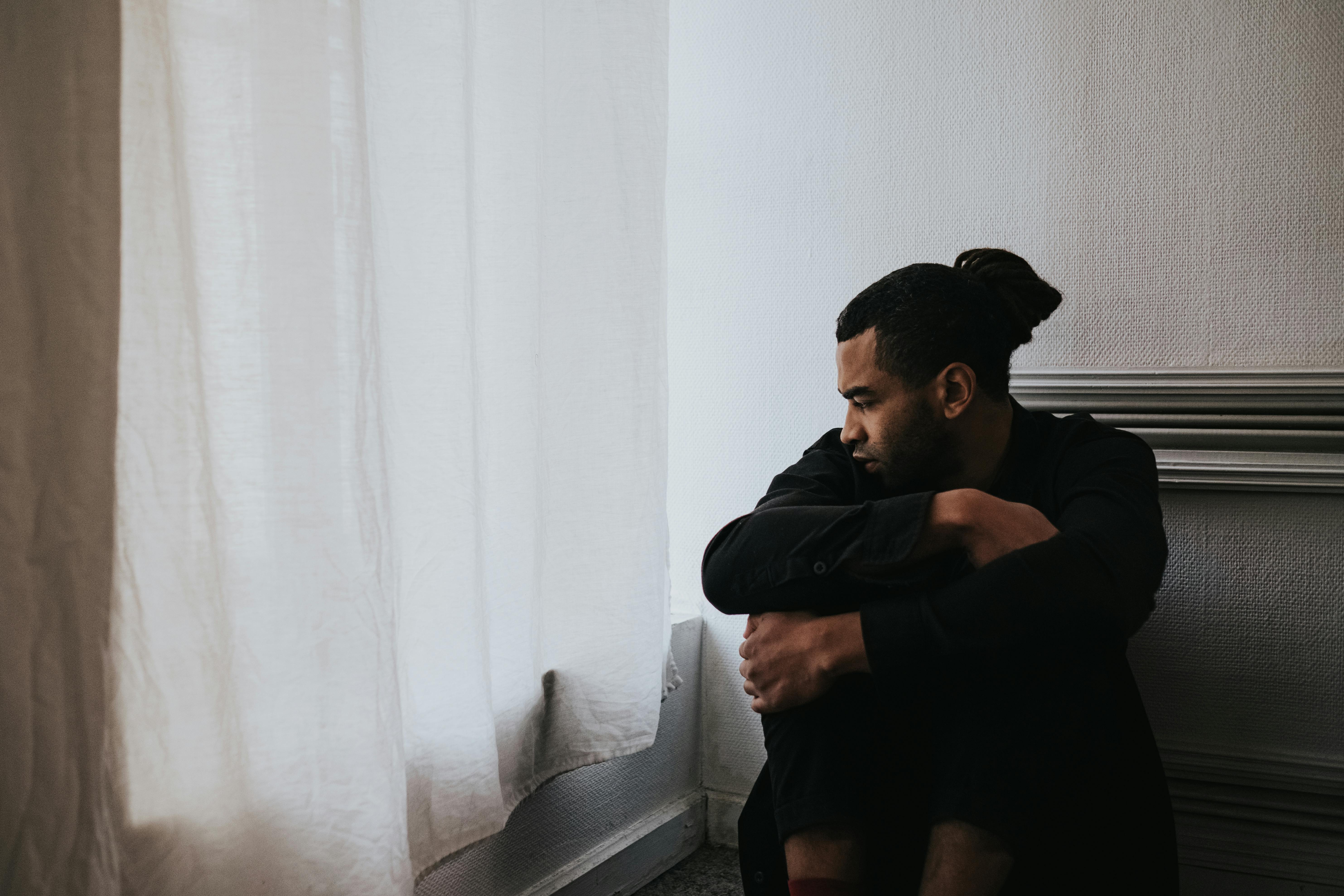
What Is Autistic Burnout? A Clear Guide for Autistic Adults
When autistic author Denea Marable experiences autistic burnout, she says it feels like she’s underwater. “I tend to move more slowly, I’m prone to sensory overwhelm, and I have challenges speaking. It’s tougher for me to focus when I’m in autism burnout; I feel as if the world is passing me by.”
Autistic burnout is a state of intense exhaustion and loss of function caused by the stress of ongoing sensory overload, constant masking, and pressure to exist in a neurotypical world without adequate accommodation.
For healthcare professional Jodes* (they/them), who has autism and ADHD, autistic burnout has a multilayered, almost snowball-like effect on their day-to-day life. “It looks like being in a consistent fog, and the pressure of the fog pushes you down, feeling so tired it's hard to move,” they explain.
Jodes also says their autistic burnout impacts their ability to complete daily living skills and tasks. Their burnout additionally causes a need for more sleep, increased procrastination, meltdowns, and migraines––as well as verbal shutdowns.
But Jodes’ and Marable’s stories just go to show that autistic burnout in adults is quite common, even more so in late-diagnosed adults.
If you’re someone who experiences autistic burnout, you deserve to understand why it occurs and its root causes. In this article, we’ll cover what autistic burnout is, why it happens, the early signs to look for, and the supportive steps you can take to recover and protect your well-being.
We couldn’t find what you’re looking for. Try again with more general keywords, or check out our top reads.


