.webp)


Key Takeaways
- Autistic burnout and depression have several overlapping traits, but they are two distinctive conditions: Depression is a clinical diagnosis, while autistic burnout is not.
- A key difference is in the response to rest: Autistic burnout is more likely to improve when demands are reduced. Depression, characterized by a persistent low mood, often persists after a rest period.
- It’s common for autistic burnout and depression to co-occur: Even though autism doesn’t directly cause depression, there are higher rates of depression and anxiety among people on the autism spectrum.
- Although there is no formal diagnosis for autistic burnout, neurodiversity-affirming clinicians still help by identifying features consistent with burnout, like chronic masking and sensory overload, while also assessing for co-occurring depression.
Key Takeaways
- Autistic burnout and depression have several overlapping traits, but they are two distinctive conditions: Depression is a clinical diagnosis, while autistic burnout is not.
- A key difference is in the response to rest: Autistic burnout is more likely to improve when demands are reduced. Depression, characterized by a persistent low mood, often persists after a rest period.
- It’s common for autistic burnout and depression to co-occur: Even though autism doesn’t directly cause depression, there are higher rates of depression and anxiety among people on the autism spectrum.
- Although there is no formal diagnosis for autistic burnout, neurodiversity-affirming clinicians still help by identifying features consistent with burnout, like chronic masking and sensory overload, while also assessing for co-occurring depression.
Profound exhaustion is impossible to ignore, even when you can’t even muster up the energy to take care of yourself. What’s even scarier is that sometimes, it’s equally impossible to figure out the root of this fatigue, because it’s a common symptom of both depression and autistic burnout.
If you’re currently navigating the confusing world of autistic burnout vs. depression — whether you just learned the term “autistic burnout” or are in the midst of self-reflection — you’re in the right place. Especially considering both conditions can co-occur.
After reading this article, you will have more clarity between autistic burnout and depression, know what to do if you think you have both conditions, and understand what a professional assessment involves.
What autistic burnout and depression each feel like
Autistic burnout and depression describe overlapping but potentially distinct experiences. Depression has established diagnostic criteria, whereas autistic burnout does not currently have an agreed-upon clinical definition or formal diagnosis.
Autistic burnout
While not a clinical diagnosis, autistic burnout is increasingly described in research and by autistic people as a state of profound exhaustion, increased difficulty functioning, and reduced tolerance for sensory or other demands. It is often discussed in the context of sustained demands, insufficient support, masking, sensory or social overwhelm, and other chronic stressors.
Autistic burnout is a very real state of intense exhaustion characterized by social withdrawal, reduced self-care, and difficulty keeping up with daily tasks. As mentioned in the journal Autism, some autistic people describe it as their mind and bodies running on a drained battery.
When your physical and mental energy are depleted, it can affect your relationships, your work responsibilities, and even your ability to take care of yourself.
Depression
Depression, however, is a clinical diagnosis characterized by feelings of sadness, emptiness, hopelessness, and a persistent low mood. People with depression can also experience a loss of interest in activities they normally enjoy, profound fatigue, irritability, and executive dysfunction.
Depression is a mental health disorder that can significantly impact your quality of life if left untreated.
Autistic burnout vs. depression at a glance
Even though autistic burnout and depression are two different conditions, many people can relate to parts of both — and rest assured that’s a common sign thanks to overlapping traits.
“Autistic burnout is commonly described as prolonged exhaustion, loss of function, and reduced tolerance to stimulation arising from chronic stress and a mismatch between demands and support,” explains Dr. Hannah Jones, a licensed clinical psychologist with Prosper Health.
Although depression can impair concentration, energy, and motivation as well, specific signs of autistic burnout can include “a marked loss of everyday skills and sensory tolerance,” says Dr. Jones.
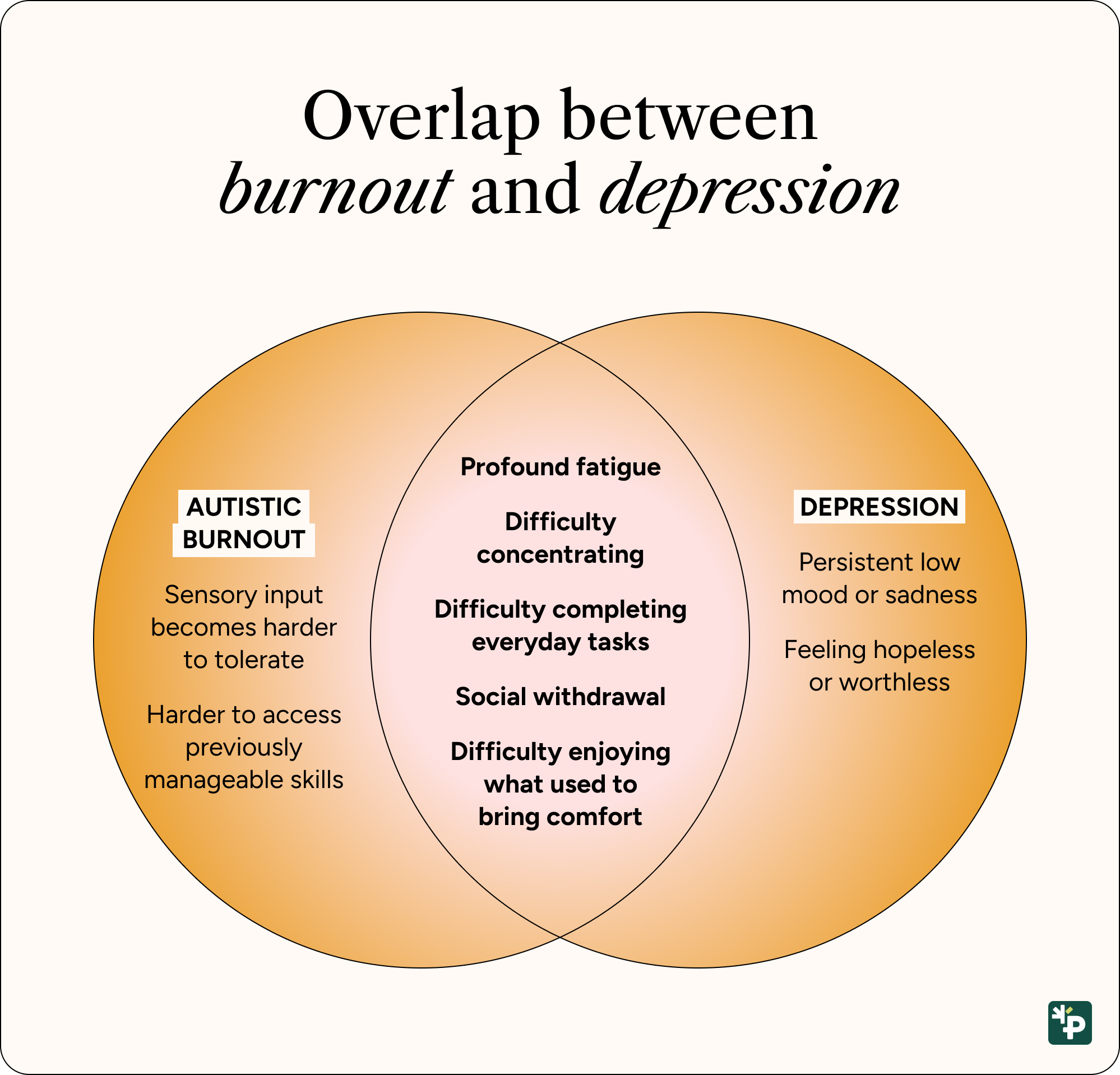
In the table below, Dr. Jones lays out a comprehensive autistic burnout vs. depression comparison to help you better understand both conditions. Keep in mind that this table is a recognition tool, not a diagnostic framework: No single feature can reliably distinguish autistic burnout from depression or rule either one out.
If you're pulling away from people, here's what that might tell you
Do you find yourself withdrawing from friends and loved ones? If so, the reasons why may offer some useful clues for determining if this is a burnout vs. depression situation. Keep in mind, however, that not everyone experiences withdrawal with either burnout or depression.
Withdrawal in burnout
This is often a functional effort to “reduce genuine sensory, social, and executive-function overload,” says Dr. Jones. Since stress, sensory overload, and chronic masking (the suppression of autistic traits) can cause burnout, recommendations for immediate relief include reducing masking and sensory load, and any non-essential demands. Therefore, in cases like these, “stepping back may be restorative,” notes Dr. Jones.
It’s also important to note that research on the benefits of withdrawal on autistic burnout remains limited.
Withdrawal in depression
The main difference between withdrawal in depression vs. burnout is that pulling back likely won’t make you feel better if you’re depressed. “Alone time may feel necessary to a person who is depressed,” says Dr. Jones, “but prolonged isolation can also remove support, routine, and rewarding experiences.”
Several studies back up Dr. Jones’s observations: One 2020 study published in Neuroscience & Biobehavioral Reviews found that social withdrawal is an adaptive response — in other words, a survival reaction, especially in the short term. But this social withdrawal can become a maladaptive response (an ineffective mechanism) if undertaken in the long term.
Another study published in BMC Psychiatry in 2025 found that while withdrawal alone didn’t necessarily worsen depression, prolonged isolation intensified depression.
So the main question to ask yourself is: What changes when you step back? Do reduced social, sensory, or everyday demands help you feel more like yourself again, or do low mood, hopelessness, or loss of interest remain even when the pressure is lower?
Recognizing your own starting point
Some people asking the autistic burnout vs. depression question now may be arriving at this moment because they just learned about the term “autistic burnout.” Others are asking the question because perhaps they’re reflecting on a previous depression diagnosis or label.
Wherever you are on your journey, know that the path you took to get here is completely valid.
If you just learned the term "autistic burnout"
You may be here because the descriptions of autistic burnout — an intense exhaustion caused by extensive stress and sensory overload that improves by reducing your physical and social demands — explain much of your own experience. It’s also important for you to know that arriving here through this specific autistic burnout vs. depression comparison, instead of a much broader “what is autism?” search, is equally legitimate.
Whether you’re curious about autistic burnout or are re-examining a previous depression, remember that now you’re in the empowering process of making sense of something with language you didn’t have before.
If you're looking back at a past "depression"
Certain people who already identify as autistic (through either formal diagnosis or self-identification) may now be reconsidering a period that was once (only) labeled depression through an autism lens. If this feels familiar, know that such a retrospective recognition is common, and most importantly, complete on its own. You don’t need a new diagnosis or a professional confirmation for this depression to be real.
Still, it is not unusual for some people to experience both autistic burnout and depression, which we’ll delve into deeper in the next section.
When it’s both autistic burnout and depression
People who are currently trying to figure out if they’re experiencing autistic burnout and/or depression may be asking the question: Can autism cause depression? The short answer is no. Although autism and depression often co-occur, per a 2020 report in Autism: The International Journal of Research and Practice, that does not mean autism directly causes depression.
Simultaneous autistic burnout and depression, however, is common, with autistic burnout sometimes leading to autistic depression, especially if the burnout is left unaddressed for a long period of time.
“When autistic burnout and depression occur together,” says Dr. Jones, “a person may feel intensely depleted and overloaded while also feeling hopeless, numb, disconnected, or unable to enjoy things that usually comfort or restore them.” She goes on to explain that reducing demands — as you would for autistic burnout — may lower the overload, “but the low mood can remain.”
If you are noticing that your ever-present heaviness isn’t lifting after reducing masking and sensory and social demands, that’s a signal that you may need professional help. While Dr. Jones notes that co-occurring burnout and depression do not automatically mean someone is in immediate crisis, “[they] should seek urgent support if they have thoughts of suicide, feel unable to stay safe, or are in severe and unmanageable emotional distress.”
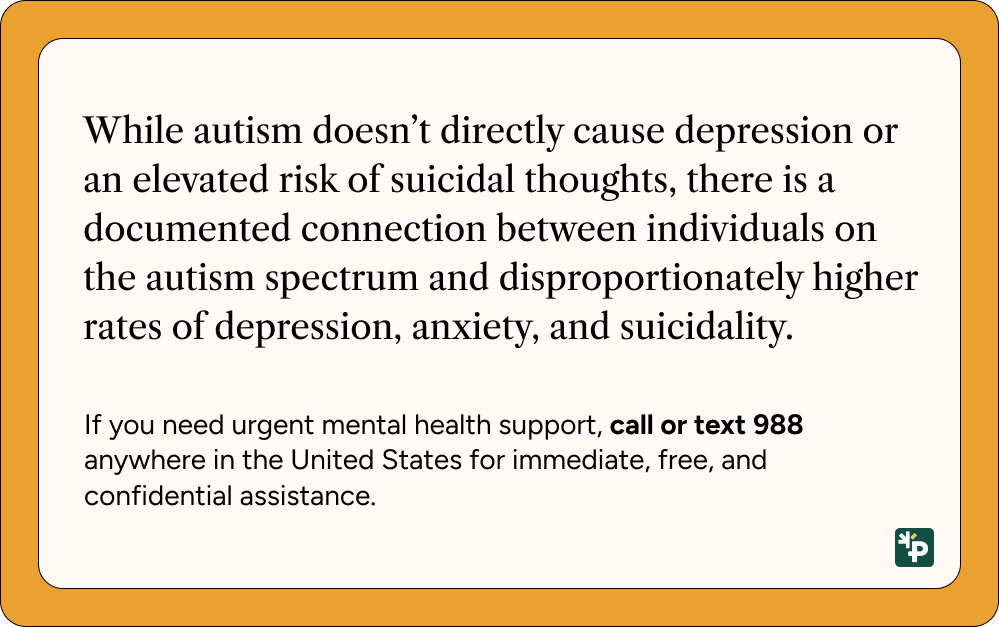
Autistic people experience disproportionately high rates of depression, suicidal thoughts, and suicidal behavior. But this does not mean that being autistic inevitably leads to depression or suicidality; many factors, including co-occurring mental health conditions, social adversity, unmet support needs, and individual circumstances influence risk.
If you need urgent mental health support, call or text 988 anywhere in the United States for immediate, free, and confidential assistance.
Getting an accurate assessment
It may be time to consider a clinical assessment if you’re experiencing concerns that don’t clearly resolve with rest or reduced demands — or if you’re grappling with the autistic burnout vs. depression question and still need clarity.
“Consider an assessment when symptoms persist, worsen, or substantially interfere with daily functioning or safety,” says Dr. Jones. She also reiterates that there is currently no standardized assessment for autistic burnout specifically. Burnout itself cannot be formally diagnosed using current mental health guidelines and criteria, unfortunately.
Even though an official autistic burnout diagnosis doesn’t exist yet, effective neurodiversity-affirming support is still available: “Clinicians familiar with autism can help a person assess for symptoms of depressed mood and features consistent with autism,” assures Dr. Jones, while they can also explore whether chronic masking, sensory strain, life changes, and unsupported demands are potentially contributing to burnout.
“Their specialized knowledge may help [these clinicians] to detect a higher possibility that a person may be experiencing features that align with the current working definitions of autistic burnout.”
Another factor that can help you get an accurate assessment, says Dr. Jones, is to present the clinician with a brief timeline that shows any significant life shifts, lists which demands became harder to manage, and when exactly your functioning changed.
Even if you’re meeting with a clinician unfamiliar with autism, “concrete examples of changes and timeframes are especially helpful,” she notes.
If you’re still not sure exactly what that kind of support can look like, we’ve got you covered in the next section.
Support beyond assessment
You know yourself best, so if you feel it’s time to seek support, trust those instincts. Below are some recommended steps and strategies:
Evaluation and diagnosis
If you’re wondering whether you may be autistic, an adult autism evaluation can be an important first step. Knowing whether you’re autistic can give you and your clinician more context for understanding what you’re experiencing — whether that turns out to be depression, autistic burnout, both at the same time, or something else.
Autistic burnout itself is not a formal diagnosis, but understanding your neurotype can make it easier to look at symptoms like exhaustion, sensory overload, changes in functioning, and low mood through the right lens. Prosper Health offers specialized, insurance-covered online autism assessments for adults.
Neurodiversity-affirming therapy
Prosper Health offers neurodiversity-affirming therapy that can help you navigate not only depression, but depression that occurs alongside autistic burnout.
Demand reduction and accommodations
- For burnout: Dr. Jones says helpful strategies include temporary workplace accommodations such as reduced workload, fewer meetings, flexible scheduling, remote work, written instructions, predictable routines, lower sensory exposure, and assistance with practical tasks. “Support needs to reduce the load, not simply ask the person to cope harder,” she says.
- For depression: A trusted individual can help you build small, repeatable supports such as regular meals and sleep, manageable movement, time outdoors when possible, and connection with safe people, says Dr. Jones.
Peer and community support and self-advocacy resources
Autistic-led peer groups and neurodivergent community spaces can reduce isolation and provide practical validation, says Dr. Jones. She recommends visiting the Association for Autism and Neurodiversity (AANE) for guidance, as the site features several useful support groups, as well as resources that can support self-advocacy.
The bottom line
A better understanding of the differences and similarities between depression and autistic burnout can be extremely beneficial for those seeking treatment or support.
But if you have reduced demands or increased opportunities for rest and recovery, have worked on autistic burnout with a professional, and continue to experience persistent low mood, loss of pleasure, or significant impairment, it may be important to get assessed for depression.
Frequently asked questions (FAQs)
How do I tell the difference between autistic burnout and depression?
It’s not always easy to tell the difference between autistic burnout and depression because both have several overlapping traits, including profound fatigue, social withdrawal, a loss of interest or pleasure, and difficulty concentrating. But there are a couple of distinctive characteristics between the two: Some who experience autistic burnout notice an increase in sensory sensitivity and/or a loss of previously manageable skills. Those experiencing depression may notice a persistent feeling of sadness or worthlessness that doesn’t lift after a period of rest.
Can autistic burnout turn into depression?
Possibly. Autism itself does not directly cause depression, but autistic burnout and depression can occur together. Autistic people and clinicians have also described situations where prolonged or unaddressed burnout seems to contribute to depression over time. Research has found that greater burnout is associated with greater depressive symptoms, but studies have not yet established whether burnout directly causes depression. So this is an area where lived experience may be ahead of the research.
Can you have autistic burnout and depression at the same time?
Yes, it is possible to experience both autistic burnout and depression simultaneously. When both conditions co-occur, a person may feel profound fatigue and notice significant sensory overload. At the same time, they can feel hopeless, numb, disconnected, and/or a loss of interest in things that once provided comfort.
What should I tell my doctor if I think I have autistic burnout?
If you think you have autistic burnout, it’s a good idea to present your clinician with a brief timeline that demonstrates any significant life shifts, lists which demands became harder to manage, and notes when exactly your functioning changed. Concrete examples of changes in your life can directly help your provider decide the best course of action.
Sources
https://www.prosperhealth.io/blog/autistic-burnout
https://pmc.ncbi.nlm.nih.gov/articles/PMC13005893/
https://www.prosperhealth.io/blog/autism-and-depression
https://neurodivergentinsights.com/autistic-burnout-vs-depression/?srsltid=AfmBOormolkgHh4OMTy1Um9AMi4M_ab8YIeZniTpjPLCKicJudoi0YAa
https://www.prosperhealth.io/blog/executive-functioning-in-autism
https://www.prosperhealth.io/blog/autism-masking
https://www.sciencedirect.com/science/article/pii/S0149763420304577
https://link.springer.com/article/10.1186/s12888-025-06792-6
https://www.sciencedirect.com/topics/neuroscience/adaptive-response
https://www.ncbi.nlm.nih.gov/books/NBK615373/
https://pmc.ncbi.nlm.nih.gov/articles/PMC13346148/#CR13
https://journals.sagepub.com/doi/10.1089/aut.2019.0079
https://whitebearpsychservices.com/blog/differentiating-autistic-burnout-from-depression-a-comprehensive-guide
https://journals.sagepub.com/doi/10.1177/1362361319872373
https://www.nature.com/nature-index/topics/l4/suicidal-behavior-and-mental-health-in-autism-spectrum-disorder
https://www.prosperhealth.io/diagnosis
https://www.prosperhealth.io/therapy
www.aane.org


