.webp)

Prosper Health's Autism Resource Center
Featured Article

Social Cues and Autism: Why the "Missed Signals" Narrative Gets It Wrong
Consider this: a coworker asks you to complete a task, “whenever you get the chance,” and you take it at face value. Two days later, you find out the request was urgent, and your coworker assumed their tone made that obvious. Or another example: you're mid-conversation with a friend, and something in their face shifts. You notice it, and you're also tracking their tone, their words, and your own response, all at once. By the time it's processed, the moment to say something has passed.
If either scene felt familiar, you’ve probably been told that you missed something obvious. Maybe you’ve been called hard to read, rude, oblivious, cold, or “bad at people.” But inside, you know that’s not really what happened.
These messages put the entire problem on one person in a conversation between two people. This article looks at autism and social cues, including why social cues can be harder to read for some autistic adults, why misunderstanding is often mutual, and what can help in situations where it matters most.
Misophonia and Autism: Why Certain Sounds Feel Unbearable, and What to Do About It
Do certain everyday sounds — like slurping, tapping, or chewing — send you into a whirlwind of distress or discomfort? Perhaps it’s not just emotional, but also physical, and you can’t shove down the reactions no matter how hard you try. If this feels relatable, you might have a common condition called misophonia.
Research suggests a possible link between misophonia and autism. Autistic individuals are more likely to have sensory sensitivities, after all. In any case, misophonia is “a nervous system response and not a cognizant decision,” says Jacqueline Shinall, Psy.D., a psychologist at neurodivergent-affirming telehealth provider Prosper Health.
Delane, a 27-year-old autistic woman, experiences misophonia due to “human sounds” like eating. “It just feels like someone constantly poking at the same spot, to the point of overstimulation and irritation,” she says. “It takes a lot of self-control to not lash out.”
Let’s take a closer look at what misophonia is, what research shows and doesn’t show about its connection to autism, and how to manage it. Whether you're wondering whether misophonia may be a sign of autism, are autistic and want to understand misophonia, or are simply looking for relief, there's no wrong reason to be here.
The Fear of Being Perceived in Autistic Adults
Let’s say you’re about to go to lunch with a colleague, but you just need to make a few last tweaks on a task.
Your colleague is happy to wait for you and remains quiet while you finish up, but it doesn’t matter. You still feel like you’re being watched. Suddenly, your anxiety skyrockets, and completing your work task now feels impossible with your coworker standing idly by.
Many call this the fear of being perceived — and it’s become a viral shorthand for a much broader feeling — but for autistic and ADHD adults, there’s usually something more concrete that’s happening behind the scenes.
Autistic content creator Morgan Foley even made a video illustrating the fear of being perceived, in which she not only demonstrates how this feeling can present in several scenarios (work, socializing, chores, etc.), but also the thoughts going through her head in that moment.
After reading this article, you will be able to recognize this type of fear as a specific, explainable pattern connected to neurodivergence, understand why it hits differently depending on your neurotype, and identify at least one concrete step toward feeling safer while still being yourself.
Most importantly, this article will help you to answer the question, “Why do I hate being perceived?”
Black and White Thinking: What It Is and Why It Happens
“If I can’t do this project perfectly, I shouldn’t have this job, should I?”
“OMG, my friend canceled our coffee meetup. I knew she never really liked me.”
“My partner forgot I wanted to see The Odyssey this weekend. I think our relationship is in trouble.”
If any of these internal monologues sound familiar, it’s not because someone gained access to your innermost emotions: It’s because these thought patterns are more common than you may think, and they’re known as black-and-white thinking.
Before we delve into these patterns more deeply, know this: It’s okay if you’re unsure whether your black-and-white thinking is a problem, a trait, or both, even if you’ve been told that you tend to “overreact” or that you “can’t see nuance.” Examining this kind of dichotomous thinking doesn’t mean it’s a flaw to be fixed or even a symptom of a specific disorder.
These patterns are just one part of who you are, and you deserve to understand what exactly black-and-white thinking is, what’s driving these patterns, and if you should pursue support.
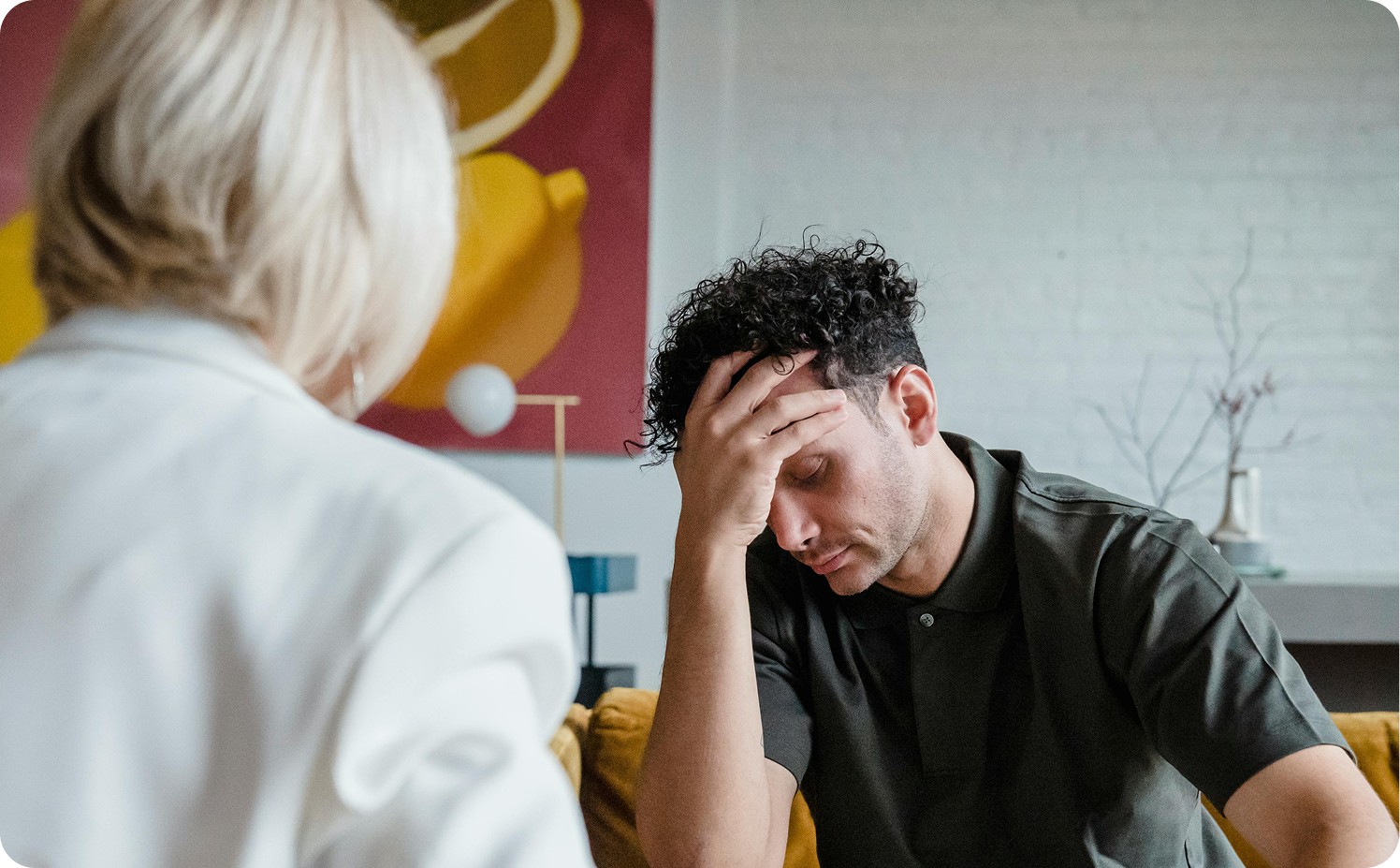
Meltdowns in Autistic Adults: Why They Happen, What They’re Like, and How to Live with Them
When many people hear the word “meltdown,” they might envision a kicking-and-screaming child, lashing out because their parent or caregiver said “no.”
While that is an accurate description of a typical child meltdown, a meltdown in an autistic adult is entirely different, and not to be confused. In fact, in many cases, meltdowns in autistic adults can look like the antithesis of a childhood tantrum. Instead of engaging in "why won't you give me what I want!?" goal-oriented behaviors that are synonymous with tantrums, autistic adults usually need to get away from people and into a calm, dark, safe space during a meltdown.
The most important thing to remember about an autistic meltdown is that it’s not a choice, but an involuntary nervous-system response to intense overload or stress. If someone is experiencing a meltdown, they are not intentionally acting out: They are dealing with complex emotions just like the rest of us, and don’t deserve the ongoing stigma that is attached to autism—and by extension, meltdowns.
Victoria Mindiola (they/theirs/she) is an autistic person who works as an inclusion consultant and educator, focusing on advocacy for neurodivergent students. When Mindiola experiences an autistic meltdown, they say they frantically need “to find a place that is safe and dark and quiet and empty of people.”
Unfortunately, the stigma around autism and meltdowns remains because adult-focused research and resources are still lacking. While there’s plenty of research available on autistic meltdowns in children, there is limited data from the perspective of autistic adults.
In this article, we’ll provide a comprehensive breakdown of autistic meltdowns in adults: What they are, why they happen, how to identify early signs, and how to support yourself or someone else.

Neurotypical vs. Neurodivergent Experiences: Understanding Neurodiversity
Neurodivergence is a term coming into increasingly popular use—but what does it mean? With a growing number of people identifying as neurodivergent, it’s important to understand what neurodivergence is, how neurodiversity adds value to our institutions and communities, and the challenges a neurodivergent person often experiences in a neurotypical world.

Masking Autism: What It Is and Why It’s Exhausting
Imagine you’re hanging out with a group of friends. On the outside, this scenario looks like a typical get-together: Everyone is laughing, making eye contact, and visibly comfortable with one another.
But for some people, there is a very good chance that much of their behavior is the result of masking, or a concealment of their autistic traits. Sure, these people may come off socially at ease, but a debilitating dance is taking place behind their eyes.
“After I've been hanging out with people, I need to take a nap for one to two hours…my brain literally needs to shut off. I feel like a computer that needs to reboot,” says Aura Marquez, an author living with autism.
Marquez says she’s been masking since she was in late elementary school: “It’s gotten to the point where I can’t turn it off.”
Masking autism is how many neurodivergent people navigate a neurotypical world, so it’s important to understand the reasons behind this practice in order to minimize stigma. While masking may provide some benefits, it’s important to also remember the toll this behavior takes on one’s mental health.
That why learning how to also unmask, under the right conditions, is essential to helping autistic people feel comfortable in their own skin. This article will explore options for those who wish to stop masking, as well as support for those who do mask.

Understanding Neurodiversity Affirming Therapy: A Guide
Neurodiversity is a growing movement that celebrates neurodivergent perspectives and the many different ways people think and engage with the world. As the cultural conversation around neurodiversity has expanded, some institutions have begun evaluating ways to better include and uplift neurodivergent people. These changes are desperately needed, especially in mental health services. Neurodiversity-affirming therapy offers neurodivergent people mental health support that recognizes our value and embraces our inherent strengths.
.webp)
Autism and Co-Occurring Conditions: A Guide
Autism is known to co-occur with several health conditions—but what does this mean? What other diagnoses are most prevalent among autistic individuals, and does an autism diagnosis inform treatment of co-occurring conditions?

Is Prosper Health Legit?
“Is Prosper Health legit?” The short answer: yes, Prosper Health is a legitimate company dedicated to filling the gap in autism-affirming mental health care for adults. I spent a great deal of time researching this question myself last year, and I hope my experience can help you make your own conclusion and connect to the resources you are looking for.
When I first found Prosper Health, I was 27 and hadn’t yet been diagnosed with autism. I had looked for mental health resources for autistic adults before, but always came up with little to show for it. With limited reviews and testimonials from other sources about Prosper Health, at the time in only its first year of operation, I was hesitant.
Trustworthiness is a critical part of healthcare, especially for medically disenfranchised communities. Seeking care myself, I was worried about wasting time with poor quality, ill-informed care, and even worse, of being scammed.
We couldn’t find what you’re looking for. Try again with more general keywords, or check out our top reads.


