.webp)

Misophonia and Autism: Why Certain Sounds Feel Unbearable, and What to Do About It
.png)
Key Takeaways
- Misophonia is a disorder in which certain everyday noises cause a strong physiological or emotional response. Research suggests it may be more common in autistic individuals.
- Sensory sensitivities and co-occurring conditions, common among autistic people, can increase the likelihood of misophonia.
- Misophonia isn’t universal among autistic individuals, nor is it exclusive to them.
- Reducing sensory load, advocating for yourself, and using noise-reducing tools can help relieve misophonia.
Do certain everyday sounds — like slurping, tapping, or chewing — send you into a whirlwind of distress or discomfort? Perhaps it’s not just emotional, but also physical, and you can’t shove down the reactions no matter how hard you try. If this feels relatable, you might have a common condition called misophonia.
Research suggests a possible link between misophonia and autism. Autistic individuals are more likely to have sensory sensitivities, after all. In any case, misophonia is “a nervous system response and not a cognizant decision,” says Jacqueline Shinall, Psy.D., a psychologist at neurodivergent-affirming telehealth provider Prosper Health.
Delane, a 27-year-old autistic woman, experiences misophonia due to “human sounds” like eating. “It just feels like someone constantly poking at the same spot, to the point of overstimulation and irritation,” she says. “It takes a lot of self-control to not lash out.”
Let’s take a closer look at what misophonia is, what research shows and doesn’t show about its connection to autism, and how to manage it. Whether you're wondering whether misophonia may be a sign of autism, are autistic and want to understand misophonia, or are simply looking for relief, there's no wrong reason to be here.
What is misophonia?
Misophonia is a lower tolerance to specific sounds of a normal volume, triggering intense emotional, physiological, or behavioral responses. The word’s origins, meaning “hatred of sound,” highlight the sheer strength of this response, notes a study in Frontiers in Human Neuroscience.
It’s not in the DSM-5, but it’s not simply a preference or overreaction, either.
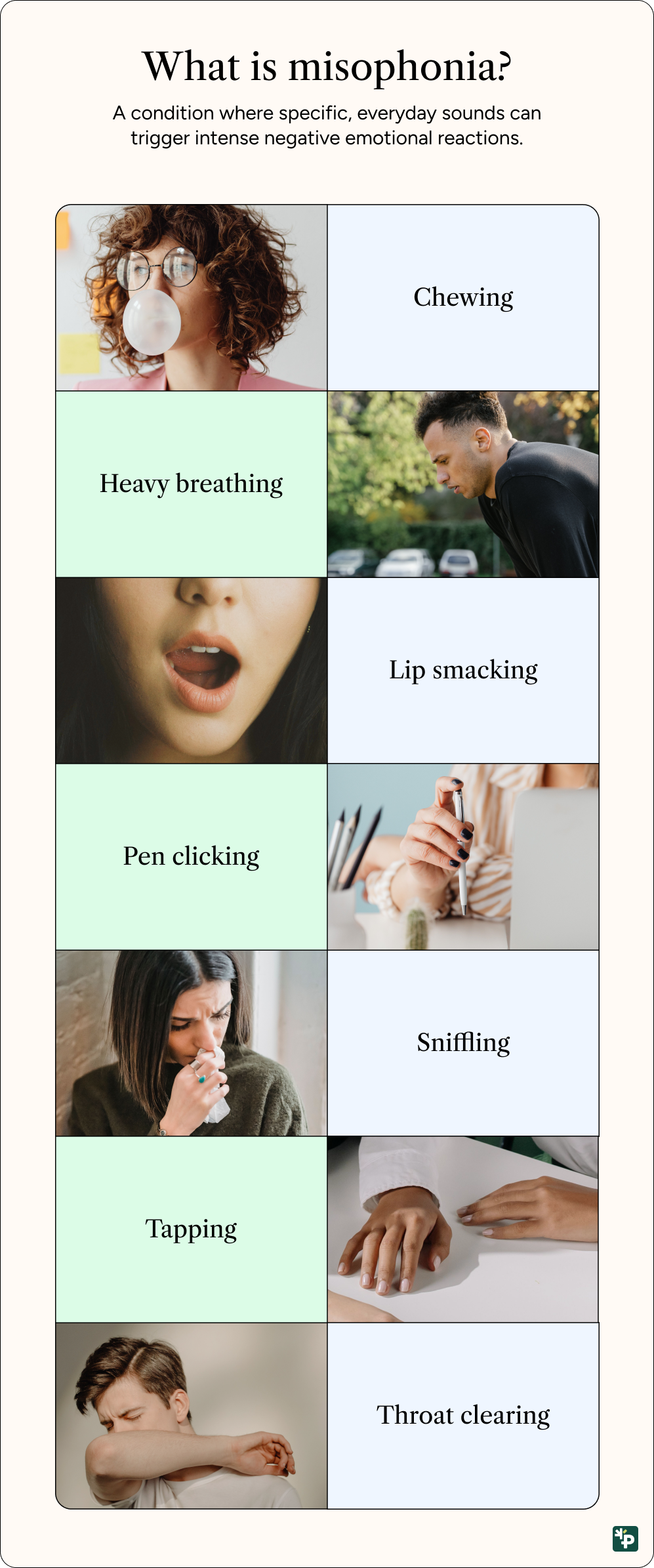
Misophonia can involve many different emotions, such as anger, disgust, anxiety, or panic. Here are some examples of common triggers:
- Chewing: A fear of chewing sounds, or an intense aversion to them, can make you dread eating dinner with others or sitting in a cafeteria.
- Heavy breathing: Hearing someone breathe heavily may send you into a state of panic.
- Lip smacking: You may find the sound of lip smacking disgusting.
- Pen clicking: The sound of someone clicking their pen may fill you with rage. You might even feel the very act is rude.
- Sniffling: When you’re around someone who has allergies, you may find the noise of sniffling unpleasant.
- Tapping: Hearing someone tap their feet can become extremely annoying. Or, you may feel trapped if someone in the room is tapping their pen.
- Throat clearing: The noise of someone clearing their throat might trigger extreme irritation.
Misophonia typically begins in childhood. It can cause you to avoid situations in which you might encounter unpleasant sounds.
It’s not just you
A 2020 article in PLOS One found that shame and guilt are common among people with misophonia. Guilt is especially common in the case of verbal outbursts.
Dismissive responses from other people (for example, “just ignore it” or “you’re too sensitive”) might also make you ashamed of your misophonia. However, more people have the condition than you might think.
It’s also important to keep in mind that “reactions are a nervous system response and not a cognizant decision,” says Dr. Shinall. “The goal should be understanding your triggers and learning ways to support yourself around them, rather than judging yourself for having a nervous system that responds differently.”
How misophonia and autism are actually connected
If you’re wondering “is misophonia autism?” then the answer is no, they’re different. However, there may be a relationship between the two, though more research is needed.
The real numbers
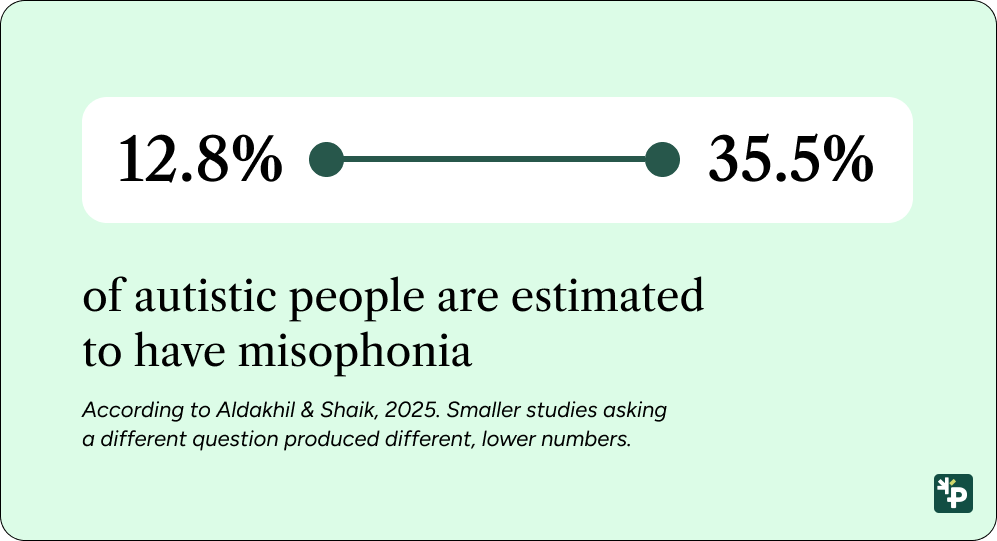
When searching for how much misophonia and autism correlate, you’ll find several different numbers. These could be as low as 3% and as high as 35.5% because the studies are asking different questions.
The 3% figure comes from a single-site clinical sample from the Netherlands, published in PLOS One. This found 3% of clients with misophonia were diagnosed autistic.
A 2025 review in Research in Developmental Disabilities looked at the inverse question. Across 14 studies, the estimated prevalence of misophonia among autistic people ranged from 12.8% to 35.5%.
According to Dr. Shinall, the wide range may be because "studies haven’t always used the same definitions or measures.”
Why they’re connected
“We don't yet have a full understanding of misophonia, or why it is more prevalent among individuals with autism,” says Dr. Linda Dolin, medical director of The Sylvia Brafman Mental Health Center.
We do know, though, that sensory processing differences may play a role. A common trait of autism is sensitivity to sensory input in general. For some people, this might include certain noises, contributing to misophonia, notes Dr. Shinall.
A 2022 study in the Journal of Autism and Developmental Disorders suggests that people with misophonia have higher levels of autistic traits, on average. These include sensory sensitivity, attention to detail, and differences in emotional regulation.
Studies also show overlap between misophonia and disorders common among autistic people. These include OCD, depression, and anxiety. This can skew the numbers even higher, says Dr. Dolin.
What this doesn't mean
Having misophonia isn’t universal among autistic people. Not every autistic person has misophonia. In addition, it’s not exclusive to autistic individuals. Simply having misophonia doesn’t necessarily mean you’re autistic.
If you're wondering whether misophonia is a sign you're autistic
It’s common and understandable to wonder “What is the cause of misophonia?” and “Is misophonia a sign of autism?” The truth is that misophonia can affect anyone, whether they’re autistic or not.
“I would be more interested in whether someone also recognizes the broader lifelong pattern associated with autism,” says Dr. Shinall. These include differences in communication, sensory sensitivities beyond sound, predictability and routines, or intense interests.
If you do notice patterns like the above, it may be a good idea to seek out an autism evaluation. We’ll discuss this more later.
If you're autistic and just now connecting the dots
Many autistic people live their entire lives feeling different from others in some ways, only to discover later on that these qualities are associated with their autism. So, if you’re just now recognizing your misophonia may be related to your autism, you’re not alone.
The good news, according to Dr. Shinall, is that “realization can provide a much more compassionate framework” for understanding yourself. Instead of blaming yourself for being “difficult,” you can take a look at what your nervous system is communicating.
Coping strategies that actually help
Many people ask, “How do you get rid of misophonia?” You might not be able to resolve misophonia entirely. However, Dr. Shinall points out that once you understand what’s happening to you, you can find regulation methods to help you function well.
First, we’ll explore strategies anyone can use to manage misophonia specifically. Then, we’ll look into strategies autistic people can use for sensory sensitivities in general.
Strategies for managing misophonia day-to-day
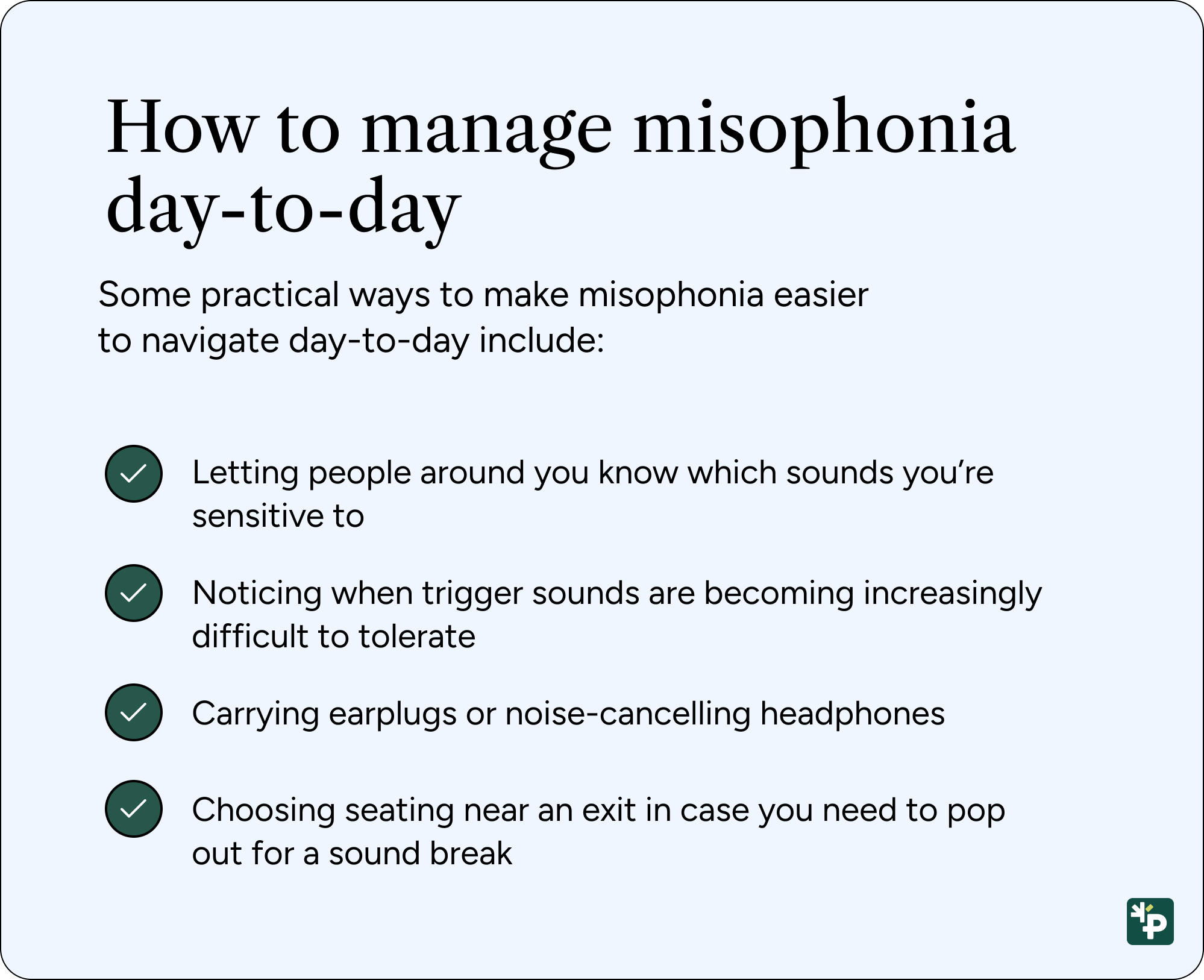
Dr. Shinall emphasizes the importance of “reducing unnecessary sensory load” and developing coping strategies for situations where avoiding triggers is impossible.
To reduce unnecessary load, let people around you know about your needs if you’re comfortable. When you might be exposed to triggers, consider choosing seating that allows for an easier exit and taking breaks when needed. Use interoception to watch for signs that your nervous system is starting to become overwhelmed. That way, you can resolve a situation before you reach sensory overload.
Of course, there are situations when none of the above strategies are necessarily feasible. So, look into tools that can block out unwanted sounds. “I have noise-cancelling earbuds with me everywhere I go,” says Clarissa Harwell, LCSW, an autistic therapist with misophonia. These can be useful at work, on the bus, and elsewhere. In some settings (such as at home), you may also be able to use background noise.
Sensory-regulation strategies for autistic adults
Stress can amplify sensory sensitivity. So, accommodating the nervous system in general can help make specific triggers more manageable, says Dr. Shinall.
Many of the above strategies may work for broader sensory issues. For example, reducing sensory demands might look like telling your friends that you find loud parties overstimulating, and suggesting a visit to a botanical garden instead.
Advocating for yourself might feel challenging, especially if you have a habit of masking. The DEAR MAN skill can help you become more comfortable telling others about your sensory needs.
When you are in situations you find highly stimulating, allow yourself time alone to recover and plan breaks before and after. Move to quieter areas if they’re available.
If you like to self-regulate with movement and repetitive behaviors (stimming), feel free to do these in a safe environment. This can be an effective way of coping with sensory overload.
Scripts for disclosing your misophonia to others
Whether or not to disclose misophonia largely depends on the person and situation. Unfortunately, not everyone can be trusted to handle your misophonia with care. But you may benefit from disclosing your misophonia to safe and supportive individuals. You may avoid misunderstandings by doing so, says Harwell.
Harwell suggests practicing scripts like the following:
- "I have something called misophonia. That means that I feel high levels of stress when I hear certain sounds. The specific sounds that cause me distress are [insert sounds that bother you]. I know that I cannot always avoid these sounds, but I'm wondering if you would be willing to minimize making these sounds when we spend time together."
- "I love spending time with you and enjoy it when we try new restaurants [or other triggering activity] together. I've noticed that my misophonia is really intense when we are eating [or other triggering activity] together, and I'd like to know if you'd be open to other types of outings when we spend time together. I want to be able to focus on being with you, rather than being on high alert for the sounds that are really triggering for me."
Finding more support
Misophonia often takes a toll on everyday life, so there’s no shame in seeking more support for your misophonia. Here’s what support might look like:
- Evaluation and diagnosis: If you’re wondering whether you’re autistic, an evaluation from a provider like Prosper Health can help. Knowing whether or not you’re autistic may also give you insight on your misophonia and how to manage it.
- A neurodiversity-affirming therapist: According to Dr. Shinall, “evidence for misophonia treatment is still developing, although CBT-based approaches and strategies targeting nervous system activation and emotional responses have shown some potential benefits.” With a neurodivergent-affirming therapist, you can work on an individualized treatment plan to regulate sensory sensitivities. Not sure where to go? Prosper Health offers virtual neurodiversity-affirming therapy covered by insurance.
- Mental health treatment: “Getting treatment for comorbid conditions like OCD or anxiety can also help to lessen the symptoms of misophonia, though it will not entirely eliminate them,” says Dolin.
- Occupational therapy: Occupational therapy may help some adults identify and develop sensory regulation strategies and environmental supports.
The bottom line
Misophonia is an involuntary nervous system response, not a choice. It may also be more common among autistic people. Whether you're autistic or not, reducing sensory load may help you alleviate misophonia. So can coping strategies like using noise-blocking tools and taking breaks when needed.
If you’re autistic or believe you might be, Prosper Health offers neurodivergent-affirming diagnosis and therapy that may help with all areas of life, including misophonia.
Frequently asked questions (FAQs)
Can misophonia happen without autism?
Yes. While misophonia is more common among autistic people, it can happen among people with other conditions or none at all.
What is the difference between misophonia and hyperacusis?
‘Misophonia and hyperacusis both involve sensitivity to sounds, but in different ways, says a 2022 review in the American Journal of Audiology. Misophonia refers to specific noises causing intense emotional distress, no matter how loud they are. Meanwhile, hyperacusis refers to physical discomfort or pain when any noise reaches a certain volume that most people could tolerate.
Should I tell people I have misophonia?
It depends. Some people are less receptive, but it can be a good idea to disclose your misophonia to people you find safe and supportive. This is especially helpful in close relationships.
“I've seen misophonia cause significant rupture in relationships when it's misunderstood or not out in the open,” says Harwell. “Clear communication is crucial.”
How can I help a partner or family member who has misophonia?
According to Harwell, what’s most important is simply to believe them about the impact of their misophonia. “Secondary to that is accommodating the misophonic person as much as possible,” she says.
So, for example, you may try not to smack your lips or tap your pen around them if those are triggers. Or you might go with them to a bookstore instead of a restaurant if they’re uncomfortable with chewing sounds.
Sources
https://pmc.ncbi.nlm.nih.gov/articles/PMC3691507/
https://www.sciencedirect.com/science/article/abs/pii/S0891422225000897
https://journals.plos.org/plosone/article?id=10.1371%2Fjournal.pone.0231390
https://pmc.ncbi.nlm.nih.gov/articles/PMC9986206/
https://pubs.asha.org/doi/10.1044/2022_AJA-22-00035
https://pmc.ncbi.nlm.nih.gov/articles/PMC10276561/
https://pmc.ncbi.nlm.nih.gov/articles/PMC8244967/
Related Posts

Sensory Processing Disorder in Adults: What It Feels Like
Let’s say you’re taking a walk, enjoying the bright sunshine and fresh air, when suddenly, a loud, smelly garbage truck speeds by. For most neurotypical people, it’s just a brief hiccup in their otherwise peaceful stroll.
But for adults with sensory processing disorder—or the more affirming, sensory processing differences—the truck’s fleeting noise and stench can cause sensory overload, thus destroying whatever pleasure they might’ve been getting from their morning walk.
Sensory processing disorder presents a tricky situation for adults, because while it is a very real condition, it is not a formal diagnosis in the Diagnostic and Statistical Manual of Mental Disorders, 5th Edition (DSM-5-TR). But this grey area doesn’t diminish how difficult and potentially isolating sensory overwhelm can be as an adult.
In this article, we’ll explain what sensory processing disorder is, why it’s not a formal diagnosis, how it can present in adults, how it relates to autism, and what supports exist for those who experience sensory overload.


