.webp)

Understanding Autism in Adult Women: Why It’s Often Missed and What It Really Looks Like
.png)
Key Takeaways
- Autism can present differently in women and AFAB (assigned female at birth) folks than it does in other demographics
- Autistic women and AFAB folks are more likely to mask to hide social differences
- Underdiagnosis and misdiagnosis is common in AFAB folks and women because diagnostic standards have changed over time
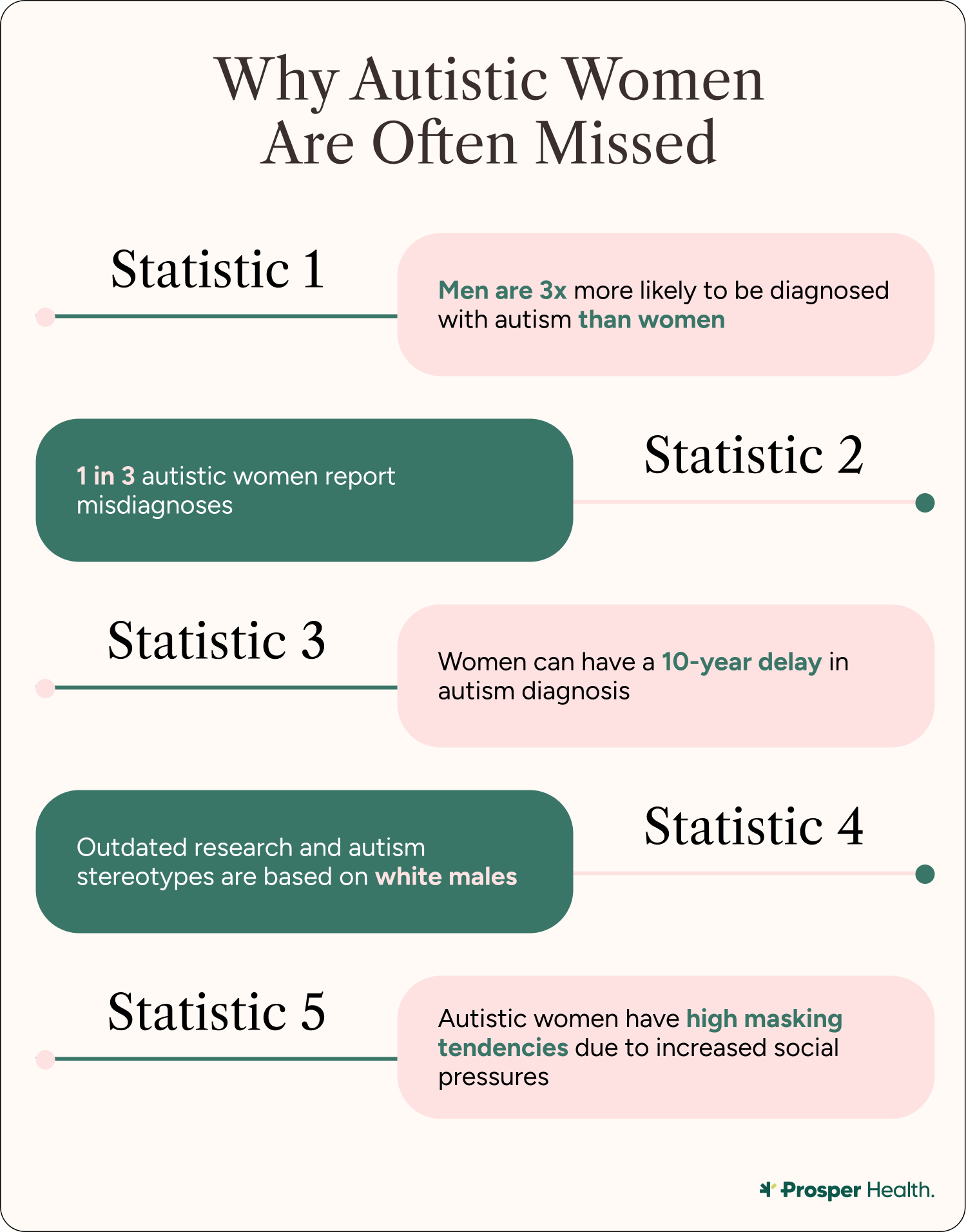
- Men and AMAB folks are 3 to 4x more likely to be diagnosed with autism than their AFAB or female peers.
Key Takeaways
- Autism can present differently in women and AFAB (assigned female at birth) folks than it does in other demographics
- Autistic women and AFAB folks are more likely to mask to hide social differences
- Underdiagnosis and misdiagnosis is common in AFAB folks and women because diagnostic standards have changed over time
- Men and AMAB folks are 3 to 4x more likely to be diagnosed with autism than their AFAB or female peers.
When I was a little girl in the early 2000s, autism was seen as a disorder that only boys had. My evaluators misdiagnosed my autism as ADHD, and mistreated my symptoms (my stims, masking, and social anxiety). Luckily, awareness around the rainbow of autistic presentations is growing, and things are starting to change. As an AFAB person who now identifies as non-binary, I was able to seek re-diagnosis and affirmation that I'm autistic—something I suspected for the majority of my life.
According to a recent study published in JAMA, autism diagnosis is increasing fastest among women between the ages of 26 and 34. And among those, women sought diagnosis a whopping 3 times more than men. This comes as no surprise, as autism is actually underdiagnosed in women because of biases in testing. The research behind these tests predominantly focused on the experiences of men and boys, so clinicians have trouble catching the varied autistic traits in women and AFAB folks.
This article will focus mainly on the experience of autistic adult women because the medical research is only just starting to catch up with AFAB experience. However, it’s worth noting the ways autism presents in nonbinary people.
Transgender and nonbinary people are around five times more likely to be autistic compared to cisgender people. The Autistic Women and Nonbinary Network’s website is a good place to start if you’d like to find autistic nonbinary people writing about their experiences.
Autism manifests in very specific ways in adult women that have been ignored until now. If you’re a woman or AFAB person wondering if you might be autistic, support is available. Read on to learn more.
Does autism present differently in women?
The short answer to this question appears to be ‘yes.’
Autism is a neurological and developmental difference that affects how people communicate, socialize, and interact with the world around them. This condition manifests differently in women and girls mainly because they are conditioned—more so than boys—to act like their neurotypical peers. When that happens, these children may not be referred for an autism evaluation during childhood, or may be misdiagnosed as having other conditions, like ADHD.
Anna Kroncke, PhD, a licensed psychologist with Prosper Health, confirms that autism may indeed present somewhat differently among adult women and girls. “Research tells us that autistic women are more likely to learn to mask their traits of autism as they reach teen years/adulthood,” she explains. Autistic women also often have more ‘normative’ special interests—like focusing intensely on animals or women’s health—and can therefore be dismissed, she adds.
Kory Andreas, LCSW, AuDHD therapist and autism educator, agrees. The autistic women she sees in her practice often internalize their distress and shape their interests so they can be socially smooth.
“Women’s special interests tend to be more socially typical, books, animals, crafting, or social justice, which means they’re often dismissed entirely or misread as quirky hobbies,” she says.
This phenomenon is part of a constellation of behaviors often described as the Female Autism Phenotype (FAP), which proposes that a higher incidence of masking may lead to fewer diagnoses overall. Adult women and girls may also be socialized to reduce their visible stims and unusual sensory responses.
“For many of us, the pressure to mask starts early. We learn to smile through overwhelm, to make eye contact even when it hurts, and to copy the people around us so we blend in,” Andreas adds.
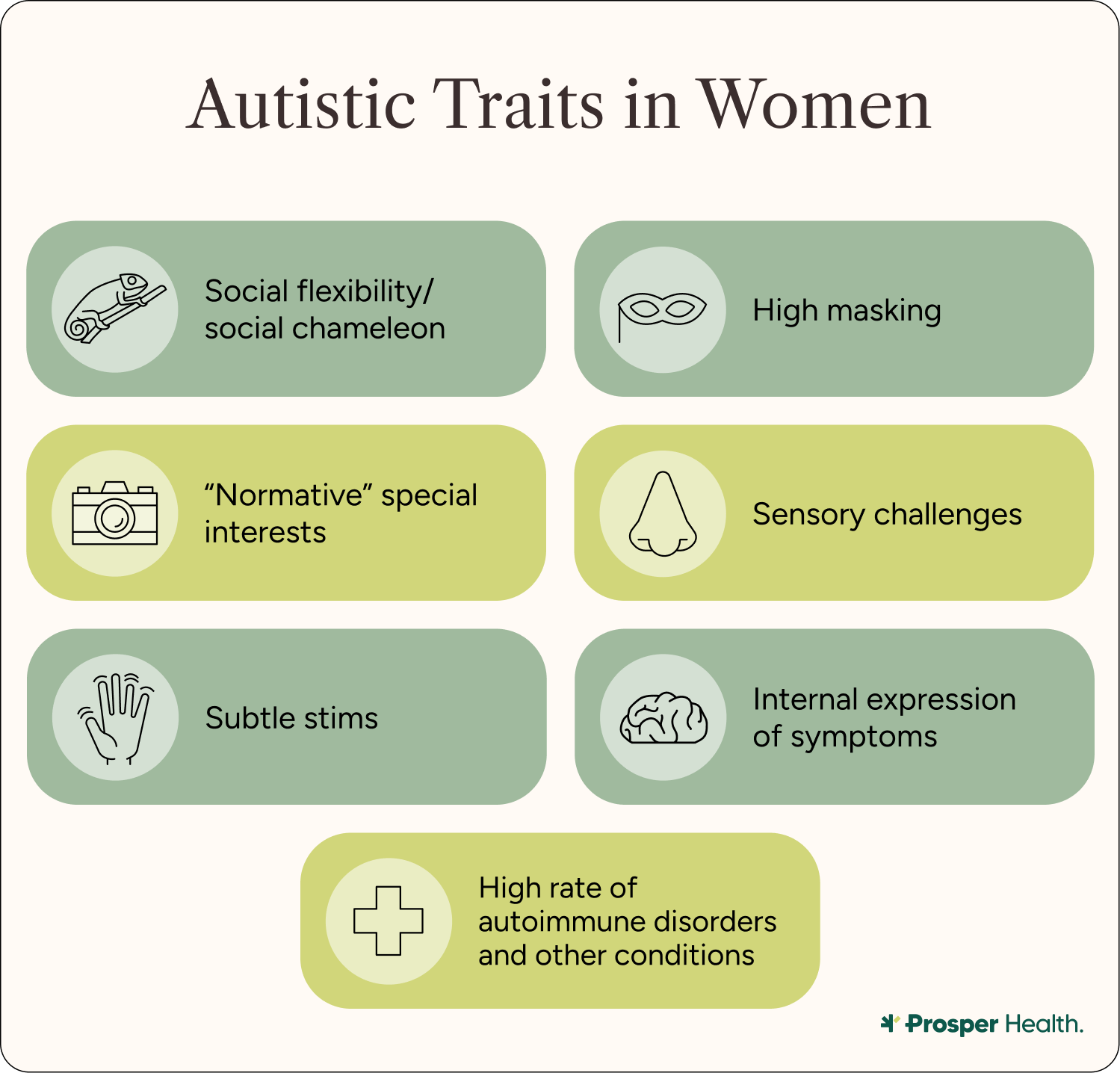
Signs of autism in women
Autistic women often exhibit differences from autistic men and allistic women in a number of ways.
Allistic, adj. Not affected by autism.
Ex. Any person who does not have autism is allistic.
Most often, they point out social differences and masking, but also co-occurring conditions and special interests. It’s important to know that signs of autism in adults will vary person by person.
Social and communication differences
Many autistic women can be highly motivated in social settings, which contrasts with many autistic men’s experiences. In fact, they are closely socialized to allistic women, with whom they attempt to forge bonds and bridge social gaps. Autistic women are often highly competent conversationalists and incredibly empathetic. “A socially motivated woman who does seek friendships and seeks to connect may not be recognized as autistic,” Dr. Kroncke explains.
The key is to look at relationship dynamics that often hide below the surface. Unlike allistic women, autistic women:
- May be hiding signs of social discomfort via masking
- May be used by their peers or purported friend group, but mistake it for a reciprocal relationship
- May seem like they don't require support
Autistic women may mask to hide these social differences.
Masking
Masking is when an autistic person camouflages their neurodivergent traits to blend in with neurotypical peers. While masking can help autistic women fit in, it can also be exhausting—and this behavior may be intentional, unintentional, or both.
In my personal experience, masking is often the only tool I have to make friends at school or at work, but it can grind me down until I veer toward autistic burnout. I frequently shuffled through identities to find common ground with whomever I was talking to, hiding the real person beneath my mask.
Girls learn at a young age that they are expected to be emotionally intelligent, socially perceptive, and adept at navigating friendships. “Many develop ‘chameleon’ behaviors in adolescence, adopting the personalities of others to stay under the radar,” says Andreas.
In typical Western social groups, women are expected from a young age to be the communicator and facilitator of relationships, and may be forced into the role of caregiver or mediator. When women do not fall into these narrowly defined roles, they may be harshly dismissed.
Thus, autistic women—most often, level 1 support needs—may force social cues, eye contact, and even model their fashion, speaking tone, and interests to seem more ‘normal.’ High masking autistic women often appear allistic to their peers. While many autistic folks, regardless of gender or sex, mask, autistic women may do so more often.
Women masking their autistic traits may look like:
- Forcing uncomfortable eye contact
- Pretending to like certain things when they don’t
- Wearing uncomfortable clothing to be ‘on trend’
- Modulating and/or practicing different speaking tones
- Resisting self-regulatory behavior
- Hiding special interests to appear ‘normal’
- Hiding burnout and exhaustion
It’s important to underscore that masking is often a protective measure. While masking can be unconscious, it is often a choice made by the autistic person to keep themself safe in a society that often harms them.
Masking can also be associated with an outdated term: high-functioning autism. High-functioning autism in women simply described the way women could fit into society, without taking into consideration their support needs or struggles.
Repetitive behaviors and special interests
Autistic women also tend to either hide or reduce any repetitive behaviors because of conscious or unconscious masking. From the time I was very young, I knew that stimming outside of certain parameters was considered as a reason for being a social pariah. Because of this, repetitive behaviors and special interests were often changed to be more socially acceptable. Stims in women often appear more allistic, and may be:
- Twirling hair
- Playing with jewelry
- Doodling
- Listening to loud music
- Perfectionism
But repetitive behaviors or need for particular routines can also become restrictive: counting calories, checking numbers on the scale, playing ‘games’ with food. Research shows that between 20 and 35% of women with autism also struggle with anorexia nervosa.
If you or a loved one is struggling with an eating disorder, the National Eating Disorders Association (NEDA) can direct you to the support you need.
Special interests may also be heavily policed in women and girls with autism. Some special interests that appear allistic may be:
- Makeup, skin and haircare
- Animals
- Reading
- Fashion
- Crafting and art
- Social justice
Special interests can be a validating experience for those with autism, and unlike allistic peers’ interests, may become all-consuming. Special interests are more than just a hobby—they can last years and deepen as time goes on.
“Their special interests are no less intense than those of Autistic boys, but they often revolve around socially typical topics like animals, books, learning about people or crafting. Because these interests don’t raise red flags, they’re rarely seen as diagnostic clues,” explains Andreas.
Like all autistic traits and manifestations, repetitive behaviors and stimming can bring great joy and comfort.
Sensory processing differences
Most people with autism experience sensory differences. Studies have shown that while men and boys with autism have sensory differences, women and girls have far more atypicalities across their lifetimes compared to boys and men.
Dr. Kroncke says that these differences are important across neurodivergence, but should be considered in any autism diagnosis for women.
“We do find that intense sensory experiences, and often those related to interoception or reading one’s emotional cues and body cues can be quite telling, particularly when there is a clear developmental course for these traits,” she explains. “Sensory traits that are intense and visceral in nature often stand out for women.”
In my own experiences, processing in proprioception (where a body is in space), in interoception (how a body feels things like thirst, hunger, exhaustion), and in tactile processing is vastly different from that of peers. For example, fleece makes my body feel horrible, and if there’s too much sound in a space, I can shut down.
Women and AFAB people may exhibit:
- Differences in how textures are felt (having ‘icky’ textures)
- Differences in understanding where their body is (clumsiness)
- Difficulty feeling bodily functions like hunger or thirst
- Sensitivity to heat, light, and bright colors
- Sensitivity to sound
- Claustrophobia and trouble with crowds
Co-occurring conditions
Women with autism are more likely to have co-occurring medical conditions than their male counterparts. According to a study survey, autistic women are more likely to have a higher prevalence of epilepsy and formal depression diagnoses, higher anxiety-like symptoms, and higher levels of stress when compared to men on the spectrum. “ADHD and anxiety may be the most highly co-occurring diagnoses with autism for women and men. We certainly see trauma and PTSD as co-occurring, and diagnoses like OCD also come up a lot,” says Dr. Kroncke.
Women also report more GI-related issues and autoimmune disorders, as well as connective tissue disorders like Ehlers-Danlos. I personally have a constellation of disorders including celiac disease, chronic migraines, hypermobility, and anxiety—which, for AFAB autistic folks, is a quite common overlap.
But this is just the beginning, says Andreas, who explains that a co-diagnosis of ADHD occurs in over 80% of her women and AFAB clients. A meta-analysis of scientific data confirms that across the population, more than a third of those with autism also experience ADHD.
Many also experience something called autistic burnout, a state of profound exhaustion that comes from years of masking and surviving with accommodations, and can lead to loss of speech, inability to work, and other declines in health.
“There is a very real cost to being misunderstood for so long. It leaves people exhausted, gaslit, and untreated,” says Andreas.
Andreas says she also sees disproportionally high rates of chronic illness like migraines, endometriosis, autoimmune issues, insomnia, GI problems, and more. But most troubling, perhaps, is the one-sided presentation of this issue.
“This is not something I see in my male clients. It raises serious questions about how masking and unacknowledged Autism trauma may be affecting our physical health over time,” she explains.
Women with autism may experience higher rates of:
- ADHD
- Anxiety
- PTSD and C-PTSD
- OCD
- Depression
- Autistic burnout
They may also experience physical disorders such as:
- hEDS/EDS
- Celiac disease, Crohn's, lupus, and other autoimmune conditions
- Mast Cell Activation Syndrome (MCAS)
- Endometriosis
- Migraines
Why is autism often missed or misdiagnosed in women?
It may come as no surprise that women who mask well are often undiagnosed or misdiagnosed. Women who mask are often highly socially competent and may not fit the traditional understanding of what autism looks like. A major issue seems to be initial recognition of autism in a patient, based on older models of diagnostic criteria. Based on one study, women have a ten-year delay in autism diagnosis, and a significantly higher age of diagnosis.
“Most of the current training for therapists and doctors is built on outdated models, specifically the medical model that sees autism as pathology (it's not!) High-masking autism is often labeled as generalized anxiety, depression, OCD, or even borderline personality disorder in women,” says Andreas.
Most of the research on AFAB autistic people has come since the 2013 DSM-5 change in diagnostic criteria. As a result, many medical professionals diagnosing autism are still behind the times. 1 in 3 autistic women report misdiagnoses.
In my own case, it took me until I was in my 30s to be accurately diagnosed as autistic, because I had learned to mask so effectively—and because the psychologists I worked with were searching for traits that aligned me with male counterparts. Gender stereotypes certainly continue to play a role in misdiagnosis, reflected in studies whose samples are biased toward men, but they make up the cornerstone of diagnostic criteria.
Some common autism misdiagnoses are:
- Generalized anxiety disorder
- Depression
- Borderline personality disorder
- Obsessive-compulsive disorder (OCD)
But things are finally changing. Over a 20-year period, the NIH found that autism diagnosis in women is rising.
How late diagnosis affects mental health
I will never forget the relief I felt when I was formally diagnosed with autism. For years, I had struggled to put into words why I didn’t feel as socially connected with my peers, and because of that would often withdraw, preferring to be miserable in private over struggling in public.
Additionally, I would experience a high level of autistic burnout over masking nearly constantly, and the result was that I was sad, angry, and anxious. I didn’t know what was wrong with me—I just knew I didn’t feel like I fit in properly.
“Autistic women often have incredible strengths including creativity, leadership, loyalty, and high levels of insight, but without the right lens, they’re misread as unstable or emotional. When therapy is not neuro-affirming, it can actually cause more harm,” says Andreas.
On average, she adds, her clients have been misdiagnosed an average of 8 times before autism was considered. Undiagnosed autism in women can lead to years of burnout and confusion over their identity, which may add to already challenging mental health outcomes.
Women can experience:
- Low self-esteem
- Burnout and exhaustion
- Identity confusion
However, Dr. Kroncke says having an autism diagnosis can be life-changing.
“Having a treatment provider who understands autism and neurodivergence is really important for autistic women, and so underdiagnosis or misdiagnosis may lead to providers who do not understand the individual’s perspective. Women may feel invalidated or blamed for their differences and unique traits versus others having an understanding of their experience in the world,” she explains.
Being recognized and understood can have a positive mental health impact, even in a late diagnosis.
“When autistic clients finally connect with a provider who sees them clearly, everything changes. With the right diagnosis and support, they can finally start to thrive,” adds Andreas.
How to seek an adult autism diagnosis
First of all, it’s important to know that self-diagnosis is a perfectly valid way to exist inside the autism community. However, receiving an official clinical diagnosis may give you additional relief. Both can bring clarity and self-acceptance.
If you choose to seek out a professional diagnosis from autism specialists such as those at Prosper Health, you'll go through a series of steps during the process. This includes a comprehensive evaluation and interview, where your mental health professional asks you a series of questions about how you function socially. While you’re being interviewed, your practitioner will also take into account your speech and your body language. At the end of your evaluation you will receive an official autism diagnosis or your evaluator may suggest other explanations for your experiences.
While I remember being very anxious for my autism evaluation, it was also an incredibly validating experience. To be taken seriously greatly changed my appreciation for self-recognition of my autistic traits.
Prosper Health offers telehealth autism assessments that are specifically for adults and are covered by insurance. The experience is easy, affirming, and supportive.
While getting tested for autism as an adult can be daunting, understanding yourself can be incredibly validating.
Finding support and community
Autism can often feel like something to be experienced alone. Making friends can be a challenge, and finding community even more so. Unmasking, which is when you reduce traits to hide neurodivergence, can be a scary experience—and sometimes we need more than just our friends to help us.
Some good resources are:
- Autistic Women & Nonbinary Network (AWAN)
- Association for Autism and Neurodiversity (AANE)
- Autism Society
You can also consider therapy—which Prosper Health also provides—even if you aren’t looking for a diagnosis, or you are self-diagnosed. Having a community is so important—and so is taking care of your mental health and hygiene. Prosper offers 100% online therapy that is affirming and supportive, with neurodiverse therapists.
The bottom line
Autism in adult women and AFAB folks is only just starting to get the attention it deserves. Diagnosis can open the door to self acceptance, community, and empathy, both for yourself and others. And while autistic women may not present the same way as men, their experience is just as valid and unique, and have just as much a right to be seen and understood.
In the end, being diagnosed with autism gave me the tools to advocate for myself and to give myself grace. I’m proud to be autistic, with all the challenges and joys it affords.
Frequently Asked Questions
How does autism affect social interactions in women?
Women often mask in social interactions so they may appear more allistic as compared to their peers and fit in better. Unfortunately, constant masking can also lead to autistic burnout, a type of exhaustion resulting from prolonged stress that can eventually lead to severe physical, mental, and emotional fatigue.
Am I masking autism as a female?
If you think you might be masking autism, it’s important to consider how your body and brain feel after a period of social demands: if you are tired physically and mentally, anxious, and still feel like you don’t fit in, it may be an indication that you are masking. It is important to know that everyone, even allistic people, mask to some extent. However, autistic masking takes place nearly constantly and over years of allistic social interaction.
If you suspect you are masking, there is a test, called the Camouflaging Autistic Traits Questionnaire (CAT-Q) that can help assess if you are masking autistic traits. It's important to note that the CAT-Q is not a diagnostic tool
What are the sensory sensitivities associated with autism in women?
Autistic women may have notable sensory sensitivities with textures, sounds, colors, odors, and light quality. They may also have proprioception challenges, such as difficulty feeling where their bodies are in space, or interoception challenges, such as difficulty feeling if they are hungry or thirsty.
Why are so many more boys diagnosed with autism than girls?
So many more boys are diagnosed with autism than girls because initially, few girls were included in the samples used for research, and those included were likely to have classic autism presentations. Most studies about autism were based on boys’ experiences—and therefore, all testing was based on those studies. Boys are 3 to 4 times more likely to be diagnosed than girls. However, with recent research about autism and girls, this gap is closing.
Sources
https://pubmed.ncbi.nlm.nih.gov/28545751/
https://jamanetwork.com/journals/jamanetworkopen/fullarticle/2825472
https://pmc.ncbi.nlm.nih.gov/articles/PMC8870038/
https://www.thetransmitter.org/spectrum/largest-study-to-date-confirms-overlap-between-autism-and-gender-diversity/?fbp=fb.1.1761572717118.738415773721823872
https://awnnetwork.org/?fbp=fb.1.1761572717118.738415773721823872
https://link.springer.com/article/10.1007/s40489-020-00197-9
https://pmc.ncbi.nlm.nih.gov/articles/PMC12314820/
https://www.prosperhealth.io/blog/adult-autism-signs
https://link.springer.com/article/10.1007/s40489-020-00197-9?fbp=fb.1.1761572717118.738415773721823872
https://pmc.ncbi.nlm.nih.gov/articles/PMC10060524/
https://pmc.ncbi.nlm.nih.gov/articles/PMC9290069/
https://pmc.ncbi.nlm.nih.gov/articles/PMC9917678/
https://pmc.ncbi.nlm.nih.gov/articles/PMC7711487/
https://pmc.ncbi.nlm.nih.gov/articles/PMC5867488/
https://link.springer.com/article/10.1007/s10803-017-3166-5
https://journals.sagepub.com/doi/10.1177/1362361315590805
https://pmc.ncbi.nlm.nih.gov/articles/PMC11001629/
https://pubmed.ncbi.nlm.nih.gov/38181181/
https://psycnet.apa.org/record/2019-13706-013
https://link.springer.com/article/10.1007/s11920-019-1020-5
Related Posts
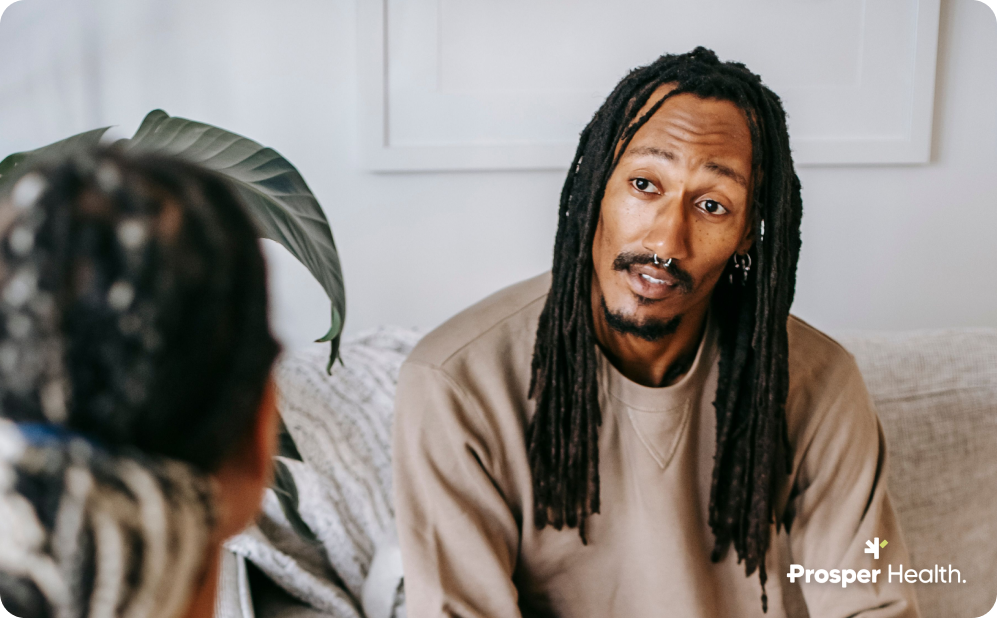
Autism and Empathy: What the Research (and Autistic People) Actually Say
We often make assumptions about others’ internal states based on their external behaviors. For example, if it seems like you’re shivering, one might guess that you’re cold. The assumption might be correct much of the time, but these assumptions are not always accurate. It’s also possible that you could be shivering but not cold, or cold but not shivering.
Likewise, if you’re autistic, you may find your behaviors misunderstood because you communicate differently from what some people expect. People might misperceive your feelings and intentions. This is common for autistic people, and that’s part of why there are harmful misconceptions about autism and empathy — specifically, that autistic people have none.
The question “Do people with autism have empathy?” prevails in blog posts and articles. The reality is that autistic people do have empathy, and in fact, many have heightened empathy. This is true even if its expression presents differently, says Anna Kroncke, PhD, a licensed psychologist with Prosper Health.
The autism lack of empathy myth causes a lot of confusion, especially for neurodivergent people who aren’t diagnosed in childhood. You may hear for years that you’re “cold” or “insensitive,” even when you have the best of intentions, and have no idea why. Or, the fact you have empathy may lead you to doubt the possibility you’re autistic to begin with.
In this article, we'll discuss what research shows about autism spectrum disorder, empathy, how to recognize it in your own life, and how having empathy doesn't rule out the possibility of being autistic.
.webp)
Autism and Co-Occurring Conditions: A Guide
Autism is known to co-occur with several health conditions—but what does this mean? What other diagnoses are most prevalent among autistic individuals, and does an autism diagnosis inform treatment of co-occurring conditions?
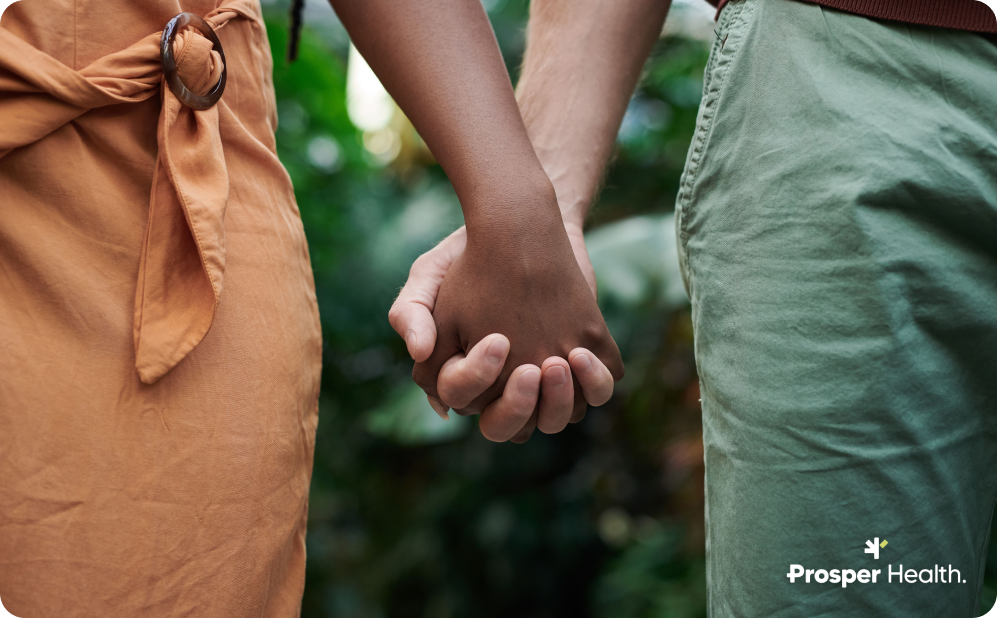
Navigating Love: A Guide to Dating Someone with Autism
Relationships are complex and often rewarding, offering connection, intimacy, and growth. This can be doubly true when you’re dating someone with autism.
If you’re neurotypical, you might notice that an autistic partner needs more alone time or is especially sensitive to sensory stimuli. To be clear, these traits aren’t exclusive to autistic individuals, nor are they universal among them. However, there are a couple of common examples of how autistic people often differ from neurotypical partners.
When present, these patterns reflect differences in how autistic people process information, communicate, and experience the world. It might take time to understand these differences, but unique cognitive profiles can add new and exciting dynamics to a relationship.
Communication and processing differences are core aspects of autism, so “navigating them is inevitably going to be a central part of the relationship,” says Dr. Kelly Whaling, Research Lead and Licensed Clinical Psychologist at Prosper Health.
A healthy relationship is rooted in honest communication, mutual understanding, and accommodation. That said, it’s common for people to misread autistic individuals’ behaviors through the lens of neurotypical norms.
So, in this article, we’ll discuss what to know about autism and romance, how factors like masking and social overwhelm impact relationships, and the perks of dating someone autistic. We'll also discuss what healthy support and mutual adaptation can look like, and the difference between processing differences and incompatibility.


