.webp)

Understanding Autism and Sleep: Navigating Sleep Patterns in Autistic Adults
Key Takeaways
- Autism and sleep are connected because autistic people often have differences in sensory sensitivities, sleep-wake cycles, hormones, and nervous system activity. All of these can affect sleep.
- Sleep issues that might be more common among autistic people include insomnia, hypersomnia, sleep apnea, movement disorders, circadian rhythm disorders, and parasomnias.
- Many sleep issues can be improved with environmental, behavioral, and sensory adjustments. However, some people may benefit from therapy or medication, and certain sleep disorders (such as sleep apnea) need clinical diagnosis and medical treatment.
- Strategies to improve sleep should be adapted for each autistic person’s individual needs, which are often different from those of neurotypicals.
Do you ever lie in bed exhausted and, instead of falling into pleasant dreams, stay awake in a sensory nightmare? The culprit may be as simple as a wrinkled sheet, scratchy tag, or even the dull hum of a refrigerator.
Alternatively, you may find your mind racing at night, find it impossible to sleep at a normal time, or have any of countless other sleep issues. In any case, you may be intimately familiar with the relationship between autism and sleep issues, whether you realize it or not.
Most studies on autism spectrum disorder or ASD and sleep focus on children. That said, emerging research suggests that sleep problems are common in autistic adults, as well. So, if you’re autistic and have sleep issues, it’s not a matter of poor discipline. Sometimes it’s just a biological reality. The good news? It’s usually treatable.
Read on for more information on why autism and sleep disturbances so often go hand in hand, and how to identify which sleep issues you might have. We’ll also discuss which sleep- improvement strategies often work for autistic nervous systems and when you’re better off consulting a healthcare provider.
Not sure if you’re autistic or not? Learn whether your sleep struggles align with a broader pattern worth exploring.
Why Sleep Is so Hard for Autistic Adults
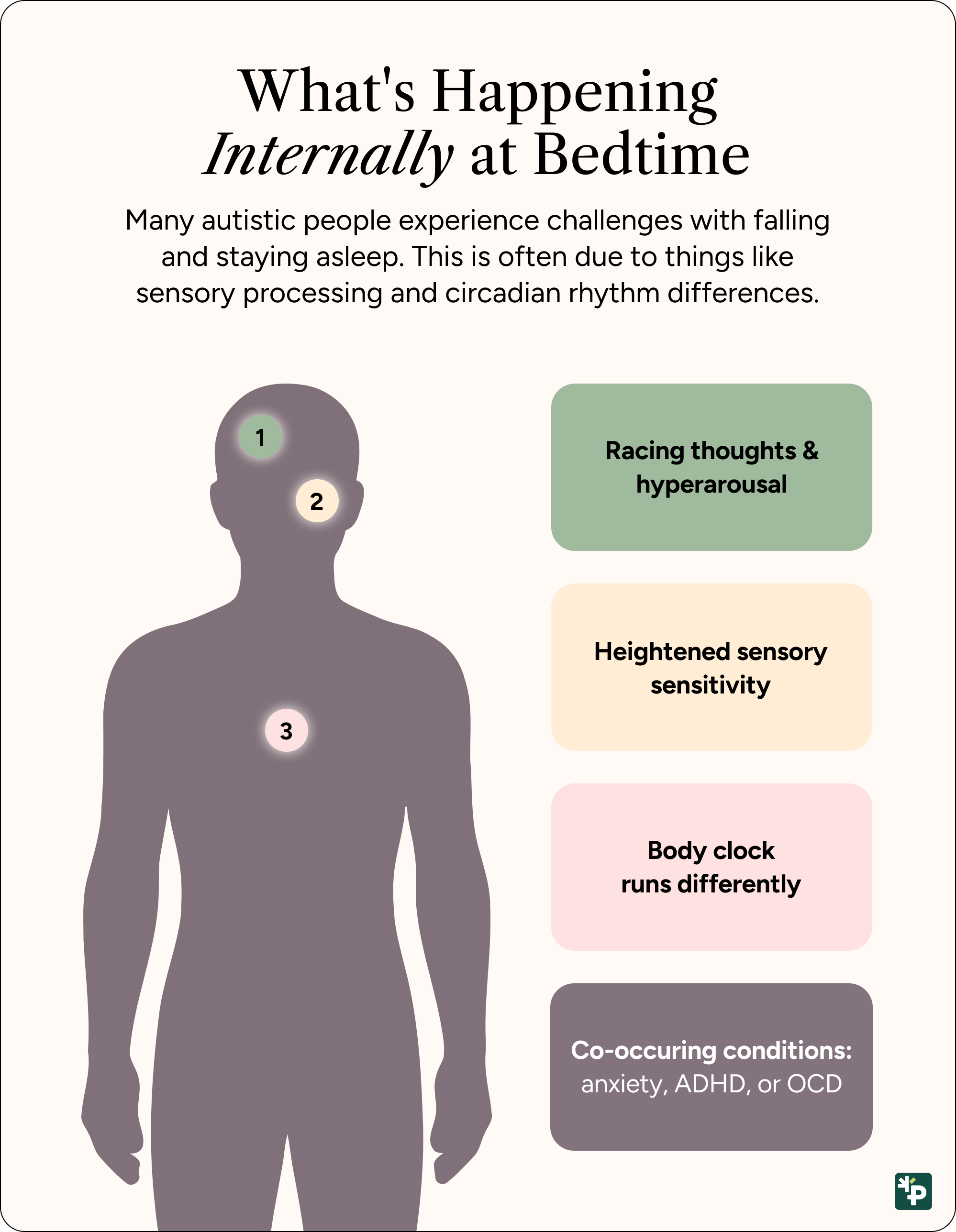
Sleep can be hard for autistic adults for several reasons, such as sensory sensitivities, circadian rhythm and melatonin differences, and arousal dysregulation. More on that below:
- Sensory sensitivities: Many autistic people are more sensitive than average to sensory stimuli. So you may find yourself tossing and turning if the room is too warm or you hear cars driving outside your window. “The feeling of wrinkled sheets prevents me from sleeping,” writes Kaitlin Schifano, an autistic adult. “Sometimes, at night, I get out of bed to smooth out any wrinkles that have formed.”
- Circadian rhythm differences: The average person has a circadian rhythm (body clock) of about 24 hours, encouraging sleep at night and wakefulness during the day. It’s common for autistic people’s circadian rhythms to be out-of-sync with this norm. So it can be hard to maintain a pattern of waking up in the morning, staying awake all day, and going to bed at night. Personally, as a neurodivergent adult, I don’t even claim to have a sleep schedule, as that implies a consistency that I don’t have.
- Melatonin differences: Autistic people often have less of the “sleep hormone” melatonin, which can contribute to autism sleep issues like insomnia.
- Arousal dysregulation: It can be tough for your nervous system to shift into a sleepy state after a day of social interactions, masking, and sensory input. “l've always had trouble relaxing enough to turn my brain off,” says Talia, a 25-year-old autistic woman who’s long struggled with sleep issues. This is common among neurodivergent adults, confirms Dr. Jacqueline Shinall, Psy.D., psychologist with Prosper Health.
How co-occurring conditions make sleep harder
Autistic people often have co-occurring conditions that can make sleep more difficult. These include OCD, anxiety, depression, and ADHD (“AuDHDers”).
People with OCD are seven times more likely to receive a diagnosis of insomnia, likely because obsessions and compulsions keep them up at night. Anxiety disorders and depression are also linked quite strongly to insomnia and other sleep disruptions.
Likewise, about 44% of adults with ADHD struggle with insomnia. One potential reason is that “it can feel very hard to disengage from stimulating activities such as screens before bed,” says Tyana Tavakol, licensed therapist in CA and FL and virtual private practice owner of Uncovering You.
All of the above complicate the relationship between autism and sleep.
The Full Range of Sleep Issues Linked to Autism
The relationship between autism and insomnia gets a fair amount of attention, and rightfully so, but autistic people can struggle with other sleep issues, as well. These include hypersomnia, sleep-related movement disorders, circadian rhythm disorders, parasomnias, and sleep apnea.
- Insomnia: Insomnia is when you have trouble falling or staying asleep. It’s a frequent sleep disorder in autism, affecting roughly 60% of autistic adults.
- Hypersomnia: Hypersomnia is when you get enough sleep and still feel extremely exhausted. Though more research is needed, this might happen more often during periods of masking fatigue, chronic stress, or autistic burnout. Autistic burnout is pervasive exhaustion and loss of function due to chronic life stress.
- Sleep-related movement disorders: While you’re asleep or at rest, your body makes simple, abnormal movements that interfere with sleep. One of the most well-known is restless legs syndrome, which involves an overwhelming urge to move your legs while you're trying to sleep. A couple of others include periodic limb movement disorder (repetitive movements of arms or legs while asleep) and bruxism (grinding your teeth).
- Circadian rhythm disorders: Circadian rhythm disorders (aka “sleep-wake cycle disorders”) happen when your body clock is out of sync with your environment. Your body feels inclined to wake up and fall asleep at unique or inconsistent hours.
- Parasomnias: Parasomnias include nightmares, sleepwalking, and night terrors (episodes of panic that involve screaming or crying).
- Sleep apnea: Sleep apnea happens when you repeatedly stop then restart breathing during sleep. It’s common (though not universal!) for people with sleep apnea to snore and gasp for air while sleeping, and feel super sleepy during the day.
A bit of transparency on current data: Aside from insomnia, circadian rhythm disorders, and general sleep issues, there’s not a lot of research on specific sleep disorders among autistic adults.
What studies have established is that all of the above disorders are more common either in autistic children or in adults with conditions that often co-occur with autism.
Anecdotally, many autistic people deal with more than one sleep disorder at once. “I used to sleep walk as a kid, and I do talk in my sleep,” says Talia. Her sleep schedule became worse after she developed chronic pain, which is yet another struggle that presents more often in autistic individuals.
When a Sleep Issue Is Worth a Doctor's Visit
You should consider seeing a doctor if your energy or sleep issues consistently affect your day-to-day functioning and self-help strategies don’t help.
It’s important to note that you can’t improve all sleep issues with typical strategies like skipping naps and wearing earmuffs. Conditions like sleep apnea, for example, require medical diagnosis and treatment.
Could your sleep struggles be a sign of autism?
Many late-diagnosed autistic people only learn their sleep struggles are associated with autism in adulthood. But by themselves, sleep issues aren’t a sign of autism. Plenty of neurotypicals have trouble sleeping, too, so sleep problems shouldn’t be used to identify whether or not someone’s autistic.
That said, they “can be one piece of a much larger clinical picture,” says Dr. Shinall.
Dr. Shinall suggests consulting a clinician with experience evaluating autistic adults if you have longstanding signs of autism such as:
- Differences in social communication
- Sensory processing differences
- Persistent adherence to routines
- Highly focused interests
Sleep Strategies That Actually Work for an Autistic Nervous System
Going through life on little sleep — or bad sleep — is rough, but improving your sleeping experience is possible. Here are some general strategies that may help you do so:
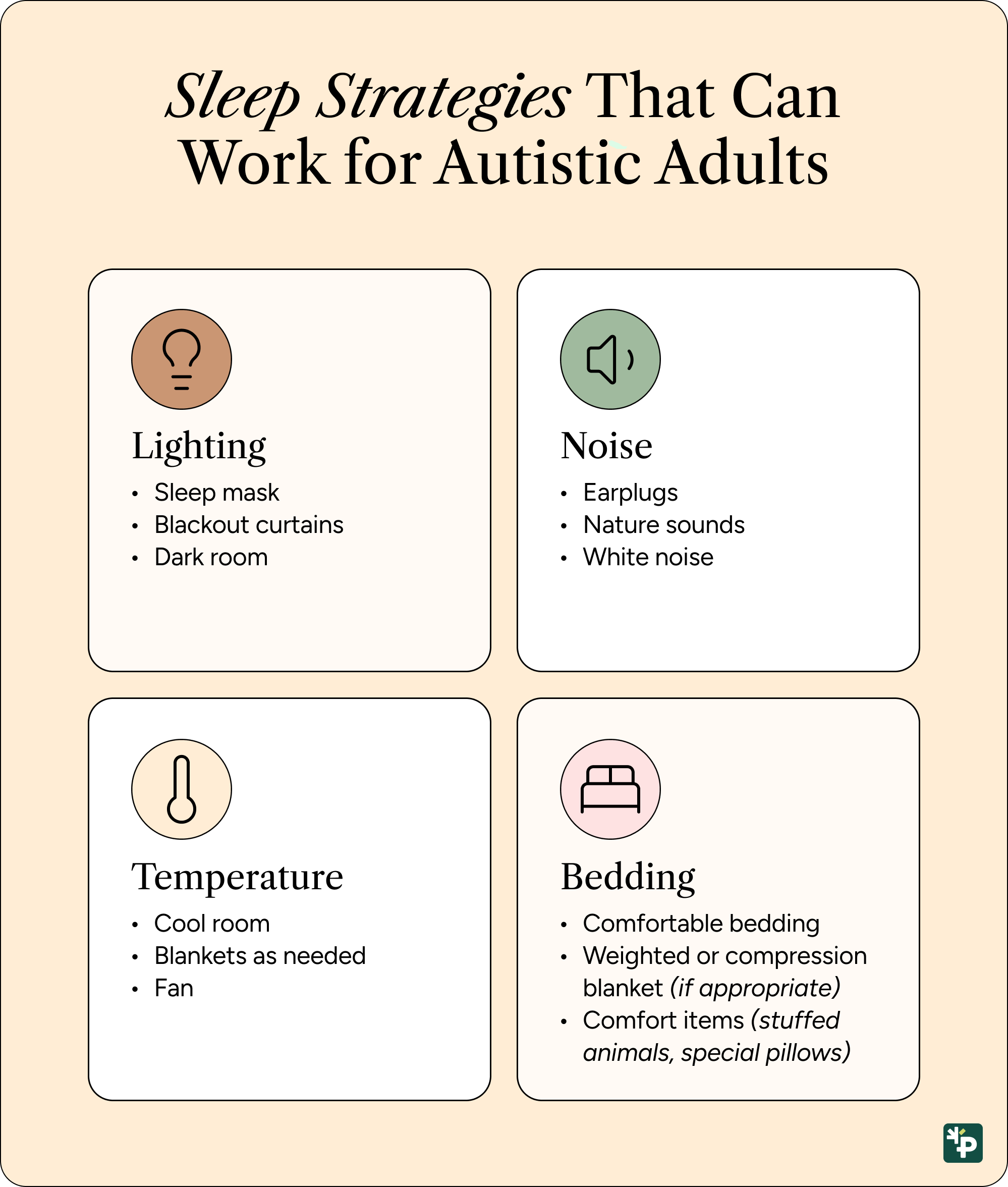
Environmental and sensory adjustments
As sensory sensitivities are incredibly common among autistic individuals, it’s vital to maintain the right sleep environment. Here are some factors to consider:
- Lighting: Shutting off the lights, closing the blinds, using blackout curtains, and wearing a sleep mask can help.
- Noise: Try earplugs or earmuffs. Alternatively, you could put on some white noise or relaxing “sleep sounds” (such as nature sounds) if they help you sleep better.
- Temperature: Adjust the thermostat to your liking. You can also use blankets or a fan to feel warmer or cooler.
- Bedding: Many autistic people like weighted or compression bedding, so that may be something to try, if it’s safe for you. Either way, opt for bedding that you find comfortable and relaxing.
Your sleep space is your own, so do what you can to make yourself comfortable.
Schifano describes using a ceiling fan, standing fan, and lightweight bedding to stay cool. “As an added bonus, my fan's sound is very soothing and drowns out any unpleasant sounds that would keep me from sleeping well,” she says. “Being in a chilly, quiet space helps prevent sensory overload, so I sleep better.”
Behavioral strategies
Develop a predictable bedtime routine that will let your mind and body know that it’s time for sleep. You can use this time to wind down. According to Dr. Shinall, some autistic adults “benefit from incorporating calming activities that match their sensory needs, such as reading, listening to familiar music, deep pressure, or other regulating activities.”
Then, try to maintain consistent bed and wake times, if you can. This will help your brain and body establish a rhythm. You’ll likely find that you’re naturally getting sleepy at bedtime and feeling more energized upon waking.
Tavakol suggests keeping a sleep diary. This involves tracking your sleep, energy levels, and other factors such as your use of medicines, caffeine, and alcohol. A sleep diary sheds light on habits that may affect your sleep and energy levels, so you can adjust your behaviors accordingly.
CBT-I
Cognitive behavioral therapy (CBT) focuses on changing unhelpful thoughts and behaviors to those that are healthier. As its name suggests, CBT-I (cognitive behavioral therapy for insomnia) is a variation of CBT that aims to improve sleep.
Your therapist will help you reframe your thoughts, adopt habits that promote better rest, and practice techniques to relax before sleep. If you're autistic with a neurodivergent-affirming therapist, they might adapt therapy by using more visual supports, adapting recommendations to your sensory needs, and allowing more flexibility in routines.
Supplements and medications
Melatonin supplements, which you can find over-the-counter, help boost sleep hormones. A 2023 review suggested that they often help autistic adults sleep faster, longer, and better.
It’s best to talk with your doctor before you take supplements, since they can sometimes conflict with certain medications or have other side effects. A prescription can also help make sure you get high-quality melatonin.
If all else fails, your doctor may prescribe medications to help you sleep. If you have insomnia, for example, your clinician may prescribe benzodiazepine receptors agonists, melatonin receptor agonists, orexin receptor antagonists, or benzodiazepines. Other medications not FDA-approved for insomnia may be prescribed off-label.
Keep in mind that, like supplements, medications can have side effects. Be sure to weigh the pros and cons with your doctor.
Other treatments
Depending on your specific sleep issues, you may require other treatments. For instance, you may need positive airway pressure (a la CPAP machines) if you have sleep apnea, or a night guard if you grind your teeth.
Some healthcare providers also recommend alternative treatments like light therapy boxes for common sleep issues such as insomnia.
If co-occurring conditions (such as anxiety or depression) contribute to your sleep issues, those should be treated, as well.
Getting More Support
Want more support for your sleep issues? Here are some resources that might help:
- A primary care doctor or sleep medicine specialist: You should see a doctor or sleep specialist if you have signs of a sleep disorder that needs a clinical evaluation, sleep study, or medical help. Examples include sleep apnea and restless legs syndrome.
- An occupational therapist: If sensory issues are interfering with your sleep, consider seeking out an occupational therapist with sensory processing experience. They may help you process and cope with sensory input.
- Peer or community spaces: Autistic-led communities and forums allow you to ask questions and learn from the experiences of others. You can find these communities on Reddit, Facebook, Discord, and elsewhere. “Just getting to connect with others who are going through similar sleep issues can help reduce isolation,” says Tavakol.
- A neurodiversity-affirming therapist: A therapist can help you relieve anxiety and develop attitudes and behaviors that set the stage for better sleep. If you’re neurodivergent, then seek out a neurodiversity-affirming clinician, as they can adapt therapy specifically to your individual needs. Don’t know where to look? Prosper Health offers neurodiversity-affirming therapy that can support autistic individuals in all areas of their lives, including sleep.
- A formal autism evaluation: If you think you may be autistic but aren’t sure, you may want to seek out a formal autism evaluation at a provider like Prosper Health. This can help inform treatment decisions.
Frequently asked questions (FAQs)
Does autism cause trouble sleeping?
By itself, autism doesn’t always cause trouble sleeping. That said, autistic people are more likely to have sleep issues. This can be because of sensory issues, circadian rhythm and hormonal differences, an active nervous system, and co-occurring conditions.
How is AuDHD different when it comes to sleep?
Both autism and ADHD, as well as AuDHD, are connected to sleep problems. For example, ADHD can delay bedtime due to racing thoughts and inconsistent routines. Meanwhile, sensory sensitivities due to autism can make it tough to fall asleep once a person gets into bed.
Do autistic adults need more sleep than neurotypical adults?
There’s not enough evidence that autistic adults need more sleep than those who aren’t autistic. That said, many autistic adults need more time to recover after socially or cognitively demanding experiences or sensory overload. This may involve more sleep.
Sources
https://www.frontiersin.org/journals/psychiatry/articles/10.3389/fpsyt.2026.1702822/full
https://pmc.ncbi.nlm.nih.gov/articles/PMC6483941/
https://www.frontiersin.org/journals/neuroscience/articles/10.3389/fnins.2021.642745/full
https://pubmed.ncbi.nlm.nih.gov/28625682/
https://pubmed.ncbi.nlm.nih.gov/32056907/
https://www.sciencedirect.com/science/article/abs/pii/S001370062600062X
https://www.sciencedirect.com/science/article/pii/S0168010223000871
https://www.sciencedirect.com/science/article/pii/S0924977X20302157
https://www.ncbi.nlm.nih.gov/books/NBK519704/table/ch3.t36/
https://www.ncbi.nlm.nih.gov/books/NBK519704/table/ch3.t35/
https://www.ninds.nih.gov/health-information/disorders/restless-legs-syndrome
https://www.ncbi.nlm.nih.gov/books/NBK560727/
https://www.nhlbi.nih.gov/health/circadian-rhythm-disorders
https://pmc.ncbi.nlm.nih.gov/articles/PMC10235460/
https://pmc.ncbi.nlm.nih.gov/articles/PMC6402728/
https://www.nhlbi.nih.gov/health/sleep-apnea
https://pmc.ncbi.nlm.nih.gov/articles/PMC9352888/
https://pmc.ncbi.nlm.nih.gov/articles/PMC5846201/
https://www.sciencedirect.com/science/article/pii/S138994572400474X
https://www.nhlbi.nih.gov/resources/sleep-diary
https://pmc.ncbi.nlm.nih.gov/articles/PMC10002474/
https://www.sciencedirect.com/science/article/abs/pii/S0278584622001877
https://www.nhlbi.nih.gov/health/insomnia/treatment
Related Posts
.webp)
Autism and Co-Occurring Conditions: A Guide
Autism is known to co-occur with several health conditions—but what does this mean? What other diagnoses are most prevalent among autistic individuals, and does an autism diagnosis inform treatment of co-occurring conditions?

How to Develop a Daily Routine For Autistic Adults
According to the diagnostic criteria outlined in the DSM-V, individuals with autism spectrum disorder (ASD) exhibit a preference for sameness and routines. Most people, both neurodiverse and neurotypical, have routines or schedules they like to stick to. The difference between neurotypical and neurodiverse routines is how someone reacts when their routine is disrupted.
Neurotypical individuals may experience frustration if their routine is thrown off, but they can usually go with the flow and adapt without too much stress. For an autistic individual, however, a disruption to their routine is often quite distressing and may even lead to a meltdown. To outsiders, an autistic individual’s stress when facing a change of plans may seem disproportionate, but routine is essential to an autistic person’s well-being.
Sensory Overload in Autistic Adults: Why It Happens and How to Cope
For autistic and neurodivergent adults, sensory overload can feel like it hits all at once. Imagine you’re in a crowded restaurant. At first, the talking all around you becomes intrusive, and you can’t concentrate on the person across from you, no matter how hard you try. Then, the repeated sound of clinking of glasses and forks on porcelain intensifies, grating at your nerves, and the smell of perfume on the woman next to you becomes unbearably strong.
Suddenly, you’re in full-body panic mode because this combination of sensory experiences is simply too much. Allistic people can compartmentalize and block out these types of input, but autistic people often cannot.
Sensory processing differences—formerly referred to as a “sensory processing disorder”—are the variations in how the brain receives, interprets, and responds to information gained through your senses from the environment and the body. Autistic people’s sensitivity to stimuli will vary depending on the individual.
Sensory overload, on the other hand, can happen when a neurodivergent person’s brain becomes so overwhelmed by sensory information in an environment (think: sights, sounds, smells, textures) that their body goes into a state of panic and fight or flight mode.
“Sensory overload, or strong sensory input, can often be described as ‘physically painful’ or ‘making my skin crawl’ by autistic adults,” says Jackie Shinall, PsyD, head of reliability and quality assurance at Prosper Health. “For example, they don’t necessarily feel anxious or stressed by the input, but rather uncomfortable overall, especially physically.”
While anyone can experience sensory issues and sensory overload, they are especially common among autistic adults and neurodivergent people more broadly. In fact, a 2021 study published in the Journal of Autism and Developmental Disorders surveyed autistic adults and found that 93.9% reported being extra sensitive to sensory experiences. Autism and sensory overload often go hand-in-hand.
If you have questions about sensory overload in autistic adults, you’ve come to the right place. In this article, we'll cover what sensory overload is, why it happens, what it feels like, and how to prevent and recover from it.


