.webp)


Key Takeaways
- Proprioception helps your body understand where you are in space and how much effort a movement takes.
- Proprioceptive input is sensory information generated through muscle stretch, joint compression, and deep pressure that sends signals to your nervous system.
- Many autistic and ADHD adults experience differences in proprioceptive processing that can affect focus, regulation, and body awareness.
- Proprioceptive seeking (craving heavy input or deep pressure) and avoiding (finding certain physical inputs overwhelming) are both real patterns, and many people can experience both in different contexts.
- Some people find proprioceptive strategies useful before, during, or after demanding situations; what helps and when is highly individual.
Key Takeaways
- Proprioception helps your body understand where you are in space and how much effort a movement takes.
- Proprioceptive input is sensory information generated through muscle stretch, joint compression, and deep pressure that sends signals to your nervous system.
- Many autistic and ADHD adults experience differences in proprioceptive processing that can affect focus, regulation, and body awareness.
- Proprioceptive seeking (craving heavy input or deep pressure) and avoiding (finding certain physical inputs overwhelming) are both real patterns, and many people can experience both in different contexts.
- Some people find proprioceptive strategies useful before, during, or after demanding situations; what helps and when is highly individual.
Have you ever carried a heavy box across the room and noticed that afterward, your body felt a little more settled? Or found yourself chewing gum during a difficult task because it made concentrating easier? For some people, these behaviors may be a way of seeking sensory input or regulating how their body feels.
Proprioception is one of the body’s lesser-known sensory systems, operating largely below conscious awareness. For many autistic and ADHD adults, proprioceptive differences can help explain patterns they’ve had their whole lives but were never able to name: the need to move to think, craving deep pressure or heavy work, or the way certain physical sensations regulate them in ways nothing else does.
Understanding proprioception might help explain behaviors that may feel random or confusing, from needing movement to focus to seeking deep pressure when you’re overwhelmed. This article will help you identify your own proprioceptive patterns, as well as what your nervous system might need to feel more regulated.
What is proprioception?
Proprioception is your body’s internal sense of position, movement, and force. It’s the system that tells you where your limbs are without looking, how hard you’re gripping something, and how much effort a movement requires.
Proprioception is generated by receptors in your muscles, joints, and connective tissue, and is mostly processed without us being aware of it. “Proprioceptive input is processed by the muscles and joints, so it gives the body a good sense of awareness,” explains Brittany Ferri, founder and occupational therapist at Simplicity of Health.
Proprioception is related, but distinct from, the vestibular system. “Proprioception tells you where your body parts are and how much force you're using,” says Rachel Loftin, chief clinical officer at Prosper Health. For example, touching your nose with your hand while your eyes are closed or walking in a dark room without looking at your feet. Proprioception is doing all of that constantly in the background.
On the other hand, “the vestibular system, located in the inner ear, detects movement, balance, and changes in head position,” according to Loftin. She adds that “It's sometimes called the 'hidden sense' because it works automatically in the background.” Most people only notice it when it’s not working the way they expect.
What is proprioceptive input?
Different people have different sensory thresholds. Some people naturally seek stronger or more sustained proprioceptive input, such as muscle stretch, joint compression, or deep pressure, while others feel regulated with much less.
Understanding where you fall on that spectrum can make this concept useful, because proprioceptive input can be sought out intentionally and help meet your sensory needs.
Why proprioceptive input matters for autistic and ADHD adults
Proprioceptive differences can show up in everyday life in several ways for neurodivergent people, especially around regulation, body awareness, and attention.
Regulation
According to research published in Sensory Integration: Theory and Practice, proprioceptive input is involved in modulating arousal states. This may help explain why heavy work and deep pressure can help settle you during sensory overload or emotional dysregulation or provide a boost when you're feeling low-energy or mentally foggy.
“Since proprioceptive input helps with body awareness, it has grounding, regulating, and soothing effects,” Ferri says. “This makes it ideal for people with autism and ADHD who may experience sensory processing concerns or anxiety.”
For a lot of people, those behaviors aren't something they consciously learned. They're simply what ended up helping long before they understood why.
Body awareness
Many autistic adults experience reduced proprioceptive clarity, which is less reliable information about where their body is in space, how much force they’re applying, or how much effort a movement requires. This is distinct from interoception (the sense of internal states like hunger or pain), although both systems can be affected and often interact.
Focus
Someone tapping their foot during a meeting or pacing while thinking may appear distracted to others, even though that movement is helping them stay engaged. Physical input, like movement, fidgeting, or chewing, can support attention regulation in many ADHD adults. For some people, movement may support attention rather than indicate distraction.
“Many autistic and ADHD adults process sensory information differently, including proprioceptive input. Because proprioception helps with body awareness, movement, motor planning, and regulation, differences can affect everything from handwriting and coordination to recognizing how much force to use when opening a door or hugging someone,” Loftin says.
Proprioceptive seeking: when your body wants more
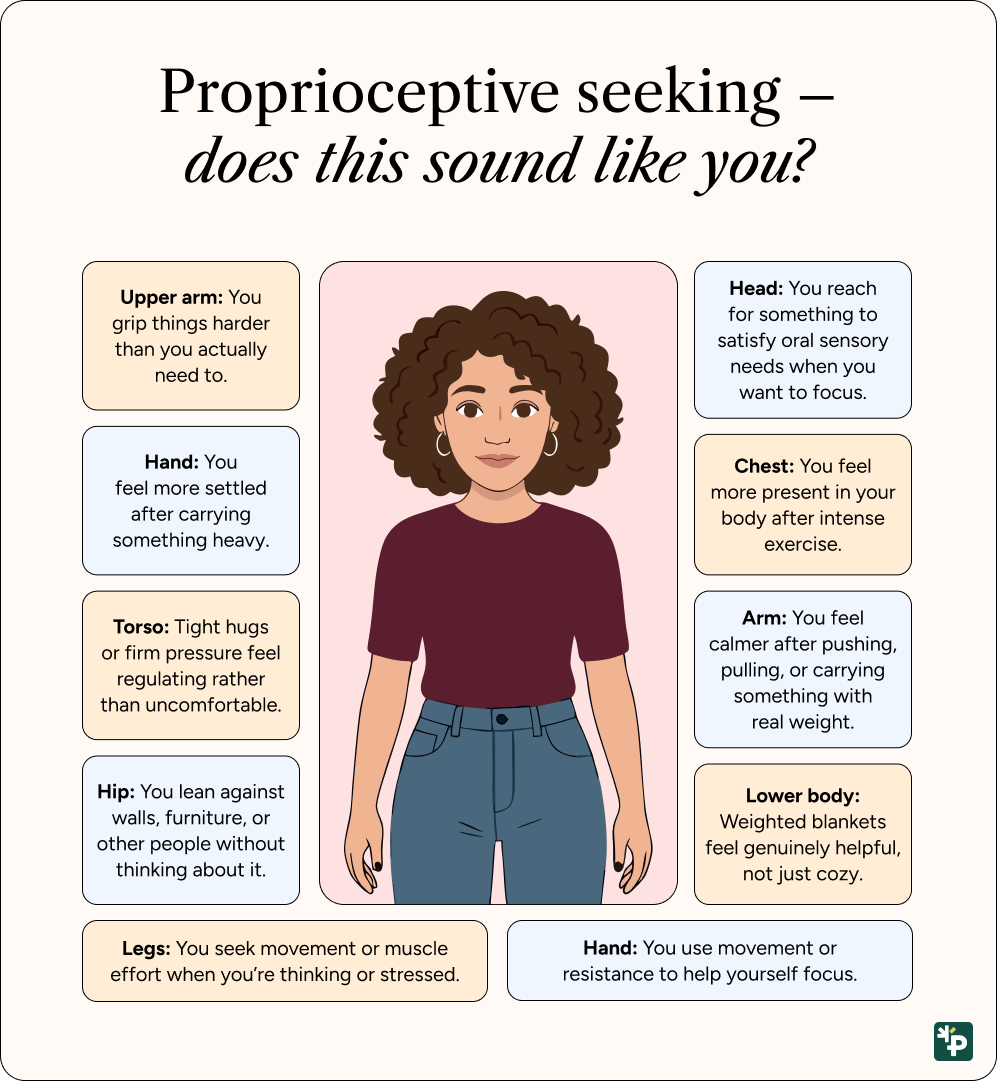
Proprioceptive seeking is a pattern where someone naturally craves stronger, longer-lasting, or more frequent proprioceptive input. “Seeking proprioception means that someone goes out of their way to get the input in whatever way they can,” explains Ferri.
These behaviors often happen automatically. Someone may find themselves seeking heavy pressure or movement before they even realize their body is asking for it. Sometimes it just feels like you can't quite settle.
You might pace while you're thinking, constantly reach for something crunchy during work, or notice that carrying a heavy box somehow clears your head. Later, these patterns may become easier to recognize as sensory needs rather than unexplained habits.
Common patterns include:
- Craving tight or weighted clothing
- Needing to chew (gum, crunchy foods, pen caps)
- Seeking out heavy lifting or intense exercise
- Preferring firm hugs over light touch
- Pacing or rocking when stressed
- Sitting with feet pressed hard into the floor
One theory behind why heavy work can feel organizing is that it provides strong, consistent sensory feedback through the muscles and joints. According to research published in the American Journal of Occupational Therapy, deep pressure, resistance, and joint compression activate proprioceptors in a way that has measurable effects on arousal regulation. This may help explain why lifting, pushing, and carrying produce a settling effect, not just a distraction from dysregulation.
Proprioceptive avoiding: when certain input is too much
Proprioceptive avoiding describes a pattern where certain types of proprioceptive input feel overwhelming or difficult to tolerate. Someone with proprioceptive sensitivity may feel overwhelmed by things other people find neutral, such as an unexpected bump, a tight hug, or physical activities that require a lot of effort.
Some autistic people may avoid proprioceptive input, such as deep pressure or certain types of movement, when those sensations feel overwhelming. And while it may seem like the opposite of seeking, many people actually experience both seeking and avoiding depending on different factors, such as context or body part. A person might crave deep pressure on their back and find firm pressure on their hands aversive.
Recognizing your own proprioceptive patterns
Finding unexpected physical contact jarring, feeling drained by heavy exertion, or preferring predictable light touch can be proprioceptive avoidance signals. But sensory needs can shift.
Someone who usually seeks movement may find certain sensations overwhelming when they’re exhausted, sick, or already overloaded. That variability is important to consider when understanding your own nervous system regulation patterns.
“Neither pattern is inherently good or bad. They simply reflect differences in how an individual's nervous system processes sensory information, and many people experience a mix depending on the situation,” Loftin says.
Whether seeking or avoiding, these patterns can seem ordinary when you've lived with them your whole life. You may have always preferred carrying every grocery bag in one trip or found yourself leaning against counters while talking without ever questioning it. It’s only after learning about proprioception that those little habits start making sense.
Proprioceptive strategies for adult daily life
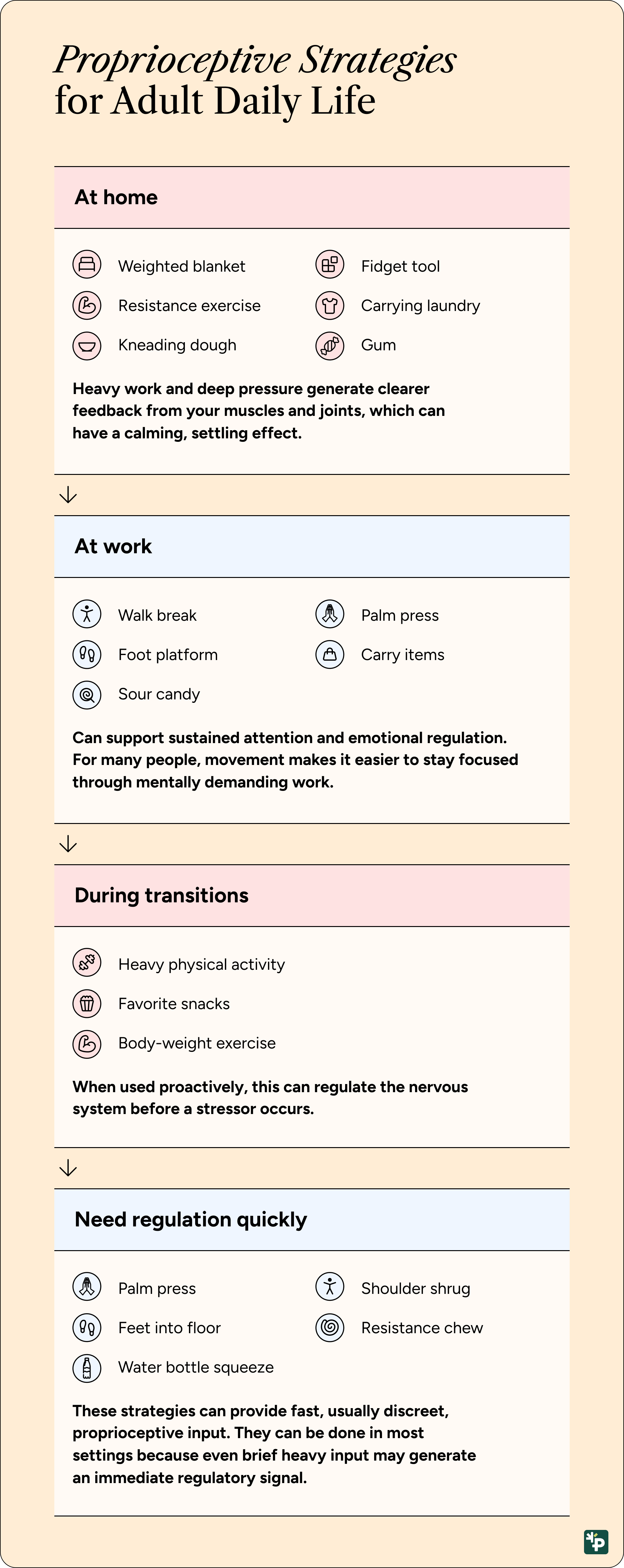
Proprioceptive input typically works best when used proactively, before a demanding situation, instead of reactively after dysregulation has set in. And, it doesn’t have to look like a formal tool. Carrying groceries, climbing stairs, and brisk walking can all provide proprioceptive input and be a part of your own sensory self-care kit.
Instead of thinking about proprioceptive input as another task to add to your day, it can help to connect strategies to moments when you already notice challenges, like before a stressful event, during a long workday, or when your body feels unsettled. This is why we’ve organized them by context.
When to seek professional support
When proprioceptive differences are significantly affecting your daily life, a neurodivergent-affirming occupational therapist may be able to help you better understand what may be contributing to those difficulties.
Ferri notes that proprioceptive differences can sometimes show up in ways people don’t immediately connect to sensory processing. “Clumsiness is another telltale sign of poor body awareness, which can be seen by bumping into things and even sometimes lacking the ability to sense when they are getting too far into someone's personal space,” she explains.
“If you are having difficulty with body awareness, coordination, or sensory regulation and you feel it is impacting your ability to perform at work, school, or home, it may be a good idea to speak with a professional,” Ferri says.
An occupational therapist might be able to help identify sensory and motor patterns, assess functional difficulties, and collaboratively explore accommodations or strategies that may fit your needs.
Prosper Health offers neurodiversity-affirming therapy and evaluation for autistic and ADHD adults who want to understand their sensory patterns more deeply.
Frequently asked questions
What is an example of proprioceptive input?
Carrying a heavy bag, doing push-ups, chewing gum, wearing a weighted blanket, and pressing your feet firmly into the floor are all examples of proprioceptive input. They each generate sensory signals through muscle stretch, joint compression, or deep pressure. Regular activities like climbing stairs or carrying groceries count too; proprioceptive input doesn't have to look like a formal sensory strategy to provide sensory input. A sensory self-care kit might be able to help you build these inputs into your daily routine more intentionally.
Is chewing or fidgeting a proprioceptive need?
For some autistic and ADHD adults, chewing or fidgeting may be one way of seeking sensory input. Chewing generates proprioceptive input through jaw muscles and joints; fidgeting generates it through the hands and wrists.
According to research published in Frontiers in Psychiatry, fidgeting during cognitive tasks may support attention in individuals with ADHD. These behaviors are often discouraged as distracting, but they might help some people feel more settled. However, people fidget for many different reasons, and improved focus does not necessarily mean proprioceptive input is the reason.
Why do I feel calmer after heavy exercise or physical activity?
Research on sensory processing suggests that proprioceptive input from heavy exercise can influence arousal regulation through signals from the muscles, joints, and connective tissues. For proprioceptive seekers especially, heavy work may provide the nervous system regulation their body is looking for.
Sources
- Proprioception Impairment and Treatment Approaches in Pediatrics, https://www.intechopen.com/chapters/75427
- A quantitative analysis of fidgeting in ADHD and its relation to performance and sustained attention on a cognitive task, https://pmc.ncbi.nlm.nih.gov/articles/PMC11246969/
- Effects of deep pressure stimulation on physiological arousal, https://pubmed.ncbi.nlm.nih.gov/25871605/
- Sensory approaches for adults with severe or profound and multiple learning disabilities: A systematic literature review, https://pmc.ncbi.nlm.nih.gov/articles/PMC12033442/
- A quantitative analysis of fidgeting in ADHD and its relation to performance and sustained attention on a cognitive task, https://pmc.ncbi.nlm.nih.gov/articles/PMC11246969/
- Understanding the Sensory Landscape, https://aane.org/autism-info-faqs/library/understanding-the-sensory-landscape
Related Posts

All About Interoception: How You Sense Your Body From the Inside
Noticing internal body signals, like hunger, thirst, or pain, is something many adults don't think twice about. But for people with interoception differences, staying on top of these cues can be a daily challenge.
Lucy*, who identifies as a “late-diagnosed AuDHD-er” shares that anytime she hyperfixates on a task, paying attention to her body’s cues is almost impossible. She even had to set goals for herself in therapy to ensure she stayed hydrated and used the bathroom regularly.
If Lucy’s experiences sound familiar (perhaps you don’t always remember to grab a drink or something to eat until you’re ravenous!) then your body might also experience interoception differently from others.
This is a common trait in neurodivergent people, and the more it’s understood, the better equipped you’ll be to support yourself and others.
In this article, we’re going to explore what exactly interoception is, how it works in the brain, how it shows up differently in autistic adults, and how to increase awareness of interoception differences.

How to Deal with Sensory Overload in Autistic Adults: Effective Strategies and Solutions
Sensory overload is a common challenge for autistic adults. Bright lights and unexpected sounds may seem harmless to some, but to the autistic brain, they can trigger the same physiological responses that bodies enter when facing something dangerous. This is why so many individuals on the autism spectrum find sensory-heavy environments so overwhelming.
A large proportion of autistic adults report experiencing sensory challenges, sometimes known as sensory processing disorder. This can include a heightened sensitivity (hypersensitivity) or reduced sensitivity (hyposensitivity) to sensory experiences. Sensory seeking refers to actively seeking out certain sensory experiences, such as craving deep pressure or being drawn to specific textures or sounds in order to regulate sensory input. On the other hand, for those with heightened sensitivity, everyday environments can quickly become overwhelming, and it can be all too easy to end up in a state of sensory overload.
Overload happens when the nervous system is bombarded with too much information all at once. The body interprets this as a threat, activating a protective mechanism designed to restore balance and prevent further distress. Sensory overload can manifest in many ways—sudden fatigue, difficulty concentrating, anxiety or irritability. Sometimes, it can be mistaken for emotional distress or even a panic attack.
Luckily, there are some helpful strategies for managing and preventing sensory overload. First and foremost, it’s important to remember that the goal is to accommodate sensory needs, not to ‘fix’ them.


