.webp)

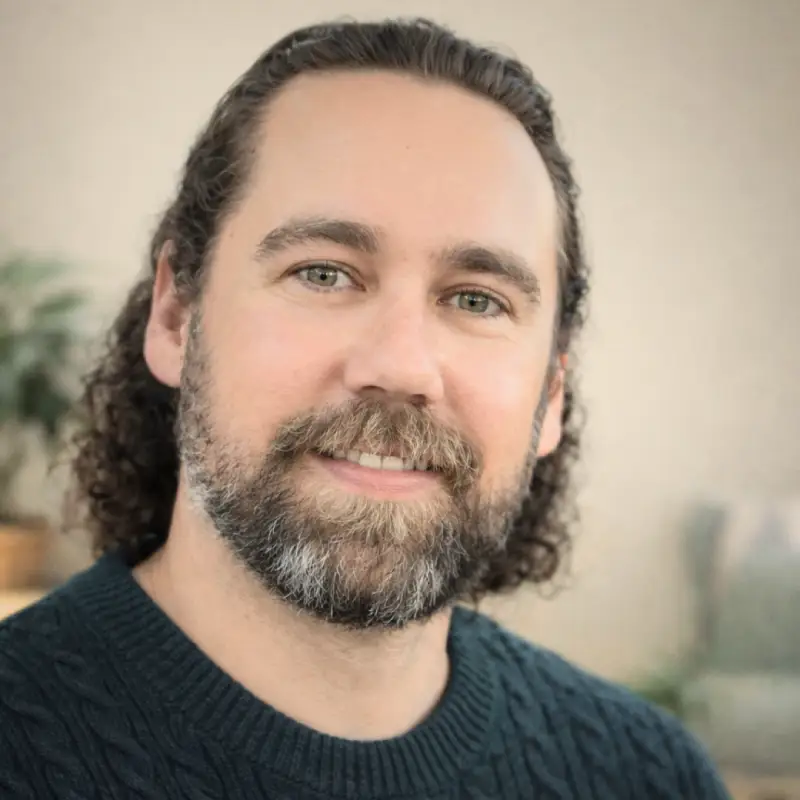
George Goldston
About
By the time most people reach me, the problem usually isn't that they can't function. It's what functioning costs — the work week that takes the whole weekend to recover from, the relationship that runs on effort nobody else seems to be spending, the growing suspicion that you're paying a tax other people aren't. I'm George, and I work with late-diagnosed autistic and ADHD adults on that math: where your energy actually goes, what your nervous system actually needs, and which demands in your life are worth what they take. I came to therapy the long way — film & media first, then animal assisted therapy on a farm, then hiking therapy in private practice. What we do together is mostly unglamorous and specific: figuring out where your energy is actually going, what you're willing to spend it on, and how to ask for the conditions you need at work and at home without a fight every time. You're usually not the problem, you're usually responding to something. Sessions are warm, flexible, and thoughtfully challenging — I'll ask the question you've been avoiding, but I won't rush you to it.
I'm queer and neurodivergent myself. I have ADHD, diagnosed late enough to mess with my sense of myself.So I know what it's like to spend years getting told you're too much, or not enough, or both. To finally get a name for the way your brain works and then realize the name doesn't fix anything on its own. It explains your past. It also kind of breaks your present.Most of the people I see arrive in some version of that. They are tired from years of trying to look fine. They are sometimes angry. They are often confused about what's actually them and what was a coping strategy that ate their life.I do this work because the kind of therapy I needed when I was figuring myself out was hard to find. I'd rather be the person you don't have to translate yourself to.
My approach is built around identity integration, not symptom management. Plain version: the goal isn't better time management or smoother executive function. The goal is a life that doesn't cost you yourself to maintain.That usually means looking at how hard you've worked to fit into systems that were never built for you. Some of those coping strategies kept you alive. Some of them are now the thing exhausting you. Sorting which is which is part of what we do.It also means taking your actual capacities seriously. Most late-diagnosed people can tell you every way they fall short and almost nothing about what they're unusually good at, because the good parts got filed under "the bare minimum" a long time ago. Deep focus, pattern recognition, an ethical spine that won't bend, the ability to care about something for twenty years. Those are not consolation prizes. They're what a sustainable life gets built on, and part of my job is helping you stop treating them as ordinary.I work from a family systems background. When something isn't landing in your life, I look first at what's around you: relationships, environments, the demands you're inside of. I look at those before I look at you. You are not usually the problem. You are usually responding to something.I will not hand you coping tips that just make masking easier. I'll be honest when something I'm doing isn't working. And I follow your lead on pace, language, and how much eye contact, video on, or small talk feels useful.


